Have you ever heard someone say, “The storm will abate soon,” and wondered what abate really means? Words like this often appear in conversations, books, or even news articles—but many people aren’t entirely sure how to use them correctly.
Understanding the word abate can make your speech and writing sound more polished and accurate, while also helping you grasp subtle nuances in language.
At its core, abate means to reduce, lessen, or become less intense. It’s about a change—often a positive one—where something overwhelming, painful, or difficult eases over time.
From a noisy argument to a heavy rainstorm, “abate” describes that moment when intensity drops and calm begins to return. By learning how to use this word naturally, you’ll not only expand your vocabulary but also enhance your ability to communicate clearly.
In this article, we’ll explore the true meaning of abate, its origin, real-life examples, common misconceptions, and why understanding it matters today.
By the end, you’ll see how this small word can have a big impact in daily life, storytelling, and even professional communication.
What Does Abate Mean?
In simple terms, abate means to lessen or reduce something that is strong, unpleasant, or intense. Think of it as a dimmer switch that turns down the volume or intensity of a situation.
Here are a few real-life examples to make it crystal clear:
- Weather: “The heavy rain finally abated in the afternoon, allowing kids to play outside.”
- Emotions: “His anger abated after he realized the misunderstanding.”
- Noise: “The loud music from the party abated around midnight, letting the neighbors sleep.”
Notice how abate isn’t about eliminating something completely—it’s about a noticeable reduction, a calming, or a decrease in severity.
Origin and Background of the Term
The word abate comes from the Old French “abattre,” which means “to beat down, strike, or fall.” Digging even deeper, its roots trace to the Latin word “battuere,” meaning “to strike.” Over time, the meaning softened from the physical act of striking down to the metaphorical idea of reducing intensity or severity.
Imagine medieval townsfolk watching storms or floods and saying, “The water abates”—this was a practical, everyday use of the word, reflecting hope and relief. Over centuries, abate evolved to describe not just physical things but emotions, noise, or even legal matters, making it a versatile term still widely used today.
How Abate Is Used in Daily Life
You might not notice it, but abate pops up in everyday conversations more than you think. Here are some practical examples:
- Weather: “The wind abated, and the sun peeked through the clouds.”
- Traffic or Noise: “The traffic jam abated after the accident was cleared.”
- Pain or Symptoms: “Her headache abated once she took the medicine.”
- Arguments or Tension: “Tensions between the two friends abated after a heartfelt apology.”
- Financial Stress: “The fear of losing money abated after the stock market stabilized.”
Using abate in your speech or writing gives a refined, intelligent tone without sounding forced.
Emotional or Practical Meaning of Abate
The emotional weight of abate is powerful. It signals relief, calm, or a return to balance. In social situations, it reflects the human desire for resolution—to reduce discomfort, stress, or conflict.
For instance, in a heated debate, saying, “Let’s wait until emotions abate” shows empathy and patience. In everyday life, the word reminds us that intensity isn’t permanent, and even challenging situations can lessen with time.
In a modern context, whether it’s stress, noise pollution, or financial worry, abate offers a sense of hope that things can improve or ease naturally.
Similar or Related Terms
Here’s a list of words related to abate, with clear differences:
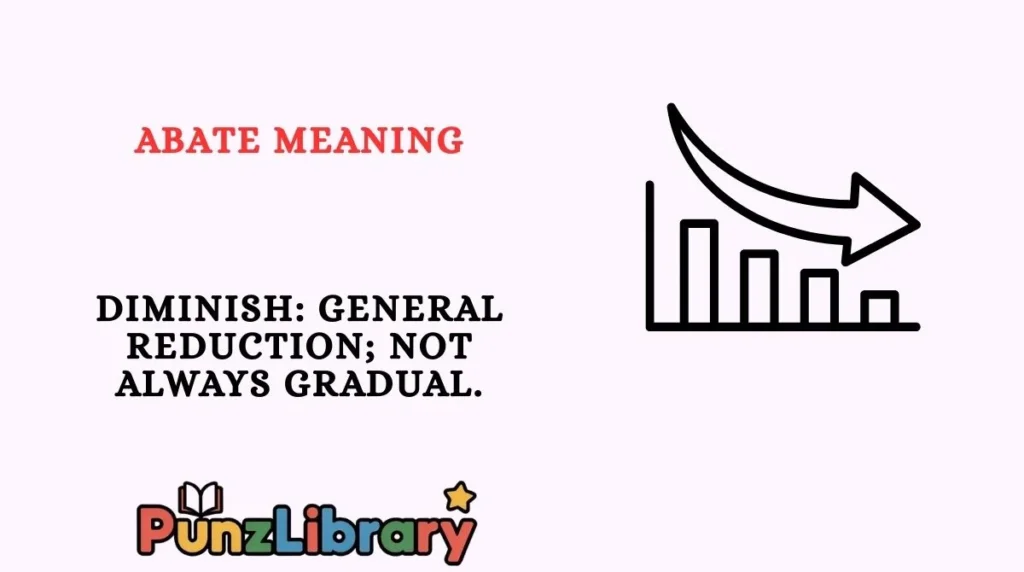
- Diminish: General reduction; not always gradual.
- Subside: Often used for natural forces, like water or storms.
- Lessen: Very general, reduces intensity or amount.
- Moderate: Suggests making something less extreme or severe.
- Ebb: Typically used for tides or figurative decline.
All these words share a theme of reduction, but abate carries a slightly formal, literary feel, making it ideal for writing, news, and professional speech.
Common Misunderstandings About Abate
Many people misuse abate without realizing it. Here are a few common mistakes:
- Abate = Stop completely → Wrong. It reduces, doesn’t eliminate.
- Only used for weather → Wrong. It applies to emotions, noise, financial stress, and more.
- Informal slang → Wrong. It’s formal or neutral, not casual slang.
- Abate = increase → Definitely wrong. It’s the exact opposite.
- Interchangeable with “disappear” → Wrong. Something can abate but still exist.
- Hard to use in everyday life → Wrong. With simple examples, it fits naturally in conversation.
Knowing these nuances prevents embarrassing mistakes in both writing and speech.
Examples of Abate in Sentences
Here are some friendly, everyday sentences using abate:
- “The excitement in the room abated after the announcement.”
- “He waited for the storm to abate before leaving the house.”
- “Her fear of public speaking abated after practicing for weeks.”
- “The tension between the two colleagues slowly abated.”
- “The economic panic abated once the government intervened.”
- “Noise from the construction site abated in the evening.”
- “The pain in his leg abated after resting for a few hours.”
- “The media frenzy abated as the news cycle moved on.”
Notice how abate fits both formal and everyday contexts, making it versatile.
Why Understanding Abate Matters Today
In our fast-paced world, stress, conflict, and noise are constant. Words like abate are more than vocabulary—they’re tools for communication, empathy, and clarity. Knowing how to use it can:
- Improve writing and storytelling
- Make conversations more precise and expressive
- Show emotional intelligence and social awareness
- Help describe changing situations effectively
Whether it’s describing a storm, financial market fluctuations, or personal emotions, abate allows you to capture the natural ebb and flow of life in a single, elegant word.
Frequently Asked Questions
What does abate mean in simple words?
It means to reduce or become less intense. Something strong or unpleasant eases or calms down.
Is abate positive or negative?
It’s neutral. The effect is usually positive because it reduces something unpleasant, but it can be neutral depending on context.
Where is abate commonly used?
In writing, news, legal contexts, weather reports, and everyday conversations about emotions, noise, or stress.
Is abate formal or informal?
Mostly formal or neutral, but it can appear naturally in casual conversation with the right examples.
Why do people search for abate?
People look it up to understand its meaning, use it in writing, or clarify news/weather reports where it frequently appears.
Conclusion
Understanding the meaning of abate is more than just learning a new word—it’s about recognizing the art of reduction, calm, and resolution. From storms to stress, abate reminds us that intensity is temporary, and relief is always possible.
So next time life feels overwhelming, remember: even challenges and chaos can abate, bringing peace, clarity, and balance back into your day. Embrace this word and its powerful, subtle wisdom—it might just change the way you express yourself.