Have you ever heard someone say, “He threw down the gauntlet” and wondered what it truly means?
Or perhaps you’ve come across the word in history books, movies, or games and felt a mix of curiosity and confusion.
The term gauntlet carries more weight than most realize—it’s steeped in history, metaphor, and modern-day relevance.
In this guide, we’ll explore the gauntlet meaning, its origins, real-life applications, emotional and cultural significance, and common misconceptions.
By the end, you’ll not only understand the word but also see how it applies to challenges, courage, and resilience in daily life.
Whether you’re a word enthusiast, a writer, or simply someone who loves learning, this article will give you everything you need to know.
What Does Gauntlet Mean?
At its simplest, gauntlet can refer to two main ideas:
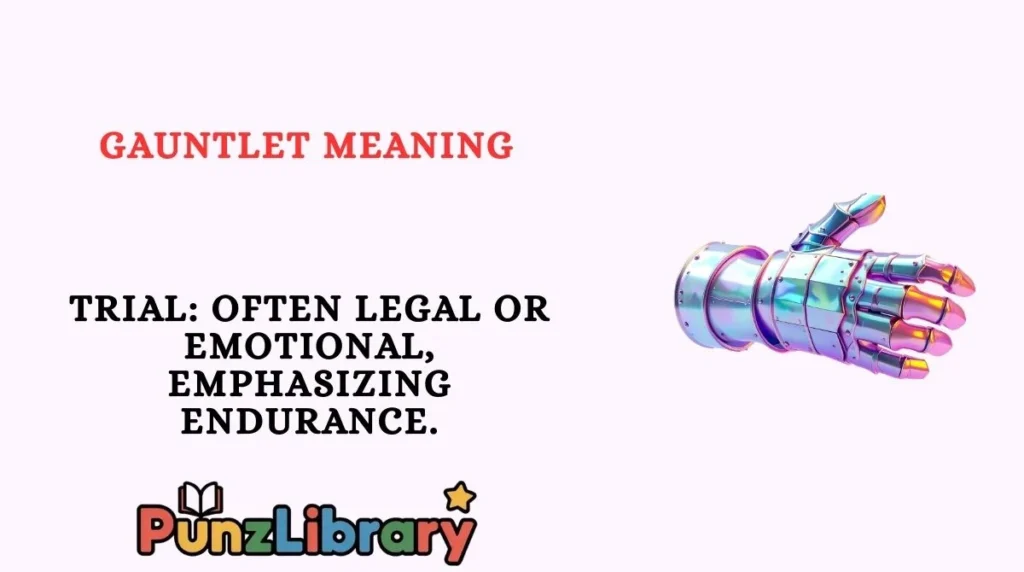
- A protective glove—often part of medieval armor, worn by knights to protect their hands.
- A challenge or trial—as in “running the gauntlet,” which means facing a series of difficulties or confrontations.
For example:
- In history class, we learn that a knight’s gauntlet was more than armor—it symbolized honor and readiness for battle.
- In modern conversation, someone might say, “She ran the gauntlet of interviews before landing the job,” meaning she faced multiple challenges.
The word is versatile. Depending on context, it can represent physical protection, intimidation, or a test of courage. Understanding its dual meaning helps in both literature and everyday usage.
Origin and Background of the Term
The word gauntlet has an interesting history. It comes from the Old French “gantelet”, a diminutive of gant, meaning glove. By the Middle Ages, it referred to the armored glove of knights, essential in duels and battles.
But the phrase “to throw down the gauntlet” has a more dramatic origin. In medieval times, a knight would literally throw his glove to the ground to challenge another to a duel. Picking up the gauntlet was accepting the challenge. Imagine the tension in the castle courtyard as metal clanged and eyes met—this single act spoke volumes about honor, bravery, and defiance.
Later, the term evolved metaphorically. Today, throwing a gauntlet might mean issuing a challenge in business, sports, or even everyday life.
How Gauntlet Is Used in Daily Life
Though it sounds old-fashioned, gauntlet still appears in modern speech, literature, and even pop culture. Here’s how it’s used:
- Workplace challenges: “I had to run the gauntlet of meetings before final approval.”
- Education: Students often face a gauntlet of exams or presentations in a single week.
- Sports: Athletes might run the gauntlet of training drills to test endurance.
- Personal life: Facing criticism, obstacles, or a difficult decision can be described as running the gauntlet.
- Entertainment: Movies or novels often depict characters “throwing down the gauntlet” to start a conflict or challenge.
Even though the imagery comes from medieval times, the idea of courage and facing trials resonates today.
Emotional or Practical Meaning of Gauntlet
Beyond its literal meaning, gauntlet carries emotional weight. It represents resilience, determination, and confrontation. Running the gauntlet isn’t just about enduring—it’s about proving your strength under pressure.
For example:
- A student presenting a difficult thesis might feel like they’re running the gauntlet of professors’ questions.
- An entrepreneur pitching a new business might face a gauntlet of skepticism before gaining investors’ trust.
Culturally, it reminds us that challenges shape character. It teaches patience, courage, and the importance of facing difficulties head-on rather than avoiding them.
Similar or Related Terms
Here are some words related to gauntlet:
- Challenge: A broader term for any obstacle or test.
- Trial: Often legal or emotional, emphasizing endurance.
- Obstacle course: A literal or figurative series of challenges.
- Duel: Historically linked to the “throwing the gauntlet” tradition.
- Test of courage: Emphasizes bravery rather than the obstacle itself.
Each of these captures a part of the gauntlet’s meaning, but none carry the historical or metaphorical depth of the original term.
Common Misunderstandings About Gauntlet
There are a few misconceptions about this term:
- “A gauntlet is just a glove.”
True, but it also symbolizes a challenge or trial. - “Throwing a gauntlet means being violent.”
Not exactly—it’s more about issuing a challenge, not necessarily physical confrontation. - “Running the gauntlet is always dangerous.”
Figuratively, it can just mean facing tough situations, not life-threatening ones. - “It’s an outdated term.”
While historical in origin, it remains relevant in language, business, sports, and storytelling.
Understanding context ensures you use the term accurately and effectively.
Examples of Gauntlet in Sentences
Here are everyday examples:
- She ran the gauntlet of interviews before finally getting hired.
- The knight threw down his gauntlet, challenging his rival to a duel.
- Entrepreneurs often face a gauntlet of rejections before success.
- Students ran the gauntlet of final exams last week.
- He accepted the gauntlet and joined the debate competition.
- The video game’s final level felt like running a gauntlet of bosses.
- Picking up the gauntlet meant she accepted the challenge to lead the project.
- Life sometimes forces us to run the gauntlet of difficult choices.
Notice how flexible the term is, both literally and figuratively.
Why Understanding Gauntlet Matters Today
Even in modern times, gauntlet is more than just a word. It’s a symbol of resilience, courage, and challenge. Whether in personal life, workplace scenarios, or creative writing, knowing the term helps you communicate strength and determination effectively.
It also enriches your vocabulary, giving you a way to describe experiences that feel intense, challenging, or transformative. From history enthusiasts to business leaders, understanding gauntlet meaning helps you appreciate the blend of tradition and metaphor in everyday language.
Frequently Asked Questions
What does gauntlet mean in simple words?
A gauntlet is either a protective glove or a challenging trial you must face.
Is gauntlet positive or negative?
It can be both—it’s neutral. The challenge might be tough, but facing it often leads to growth and achievement.
Where is gauntlet commonly used?
You’ll see it in historical contexts, literature, sports, workplace conversations, and everyday metaphors.
Is gauntlet formal or informal?
It can be both—formal in historical or literary contexts, informal in casual speech.
Why do people search for gauntlet?
People want to understand its historical origin, metaphorical use, or to use it correctly in writing or conversation.
Conclusion
The word gauntlet is more than just a term—it’s a bridge between history and modern life, connecting medieval courage to everyday resilience.
Whether it’s a knight’s glove, a series of exams, or a tough project at work, running the gauntlet teaches us strength, patience, and courage.
So next time life throws challenges your way, remember: every trial is an opportunity to pick up the gauntlet and grow stronger.
Embrace challenges with courage—they shape who you are.