Have you ever bought something that looked real, felt real, but later made you think, “Wait… is this legit?” That moment of doubt usually points to one word: bootleg.
We hear it in everyday conversations, see it online, and even laugh about it in memes. But the bootleg meaning goes deeper than cheap copies or funny knock-offs. It carries history, culture, emotion, and a strong message about authenticity in today’s fast-moving world.
In simple terms, bootleg refers to something made, distributed, or sold without permission, usually as an imitation of an original product. But beyond legality, it represents shortcuts, clever survival tactics, and sometimes even rebellion.
Understanding this word matters more than ever. From music and movies to fashion and digital content, bootleg culture is everywhere. Knowing what it truly means helps you make smarter choices, spot red flags, and understand modern language better.
Let’s unpack the full story — in a clear, human, and engaging way.
What Does Bootleg Mean?
The bootleg meaning refers to something that’s unauthorized, illegal, or unofficial, especially when it copies an original product, work, or idea.
Instead of sounding like a cold dictionary definition, think of it this way:
A bootleg item is a copy pretending to be real, without the creator’s permission.
Real-Life Examples:
- Buying a branded sneaker that looks original but wasn’t made by the official company
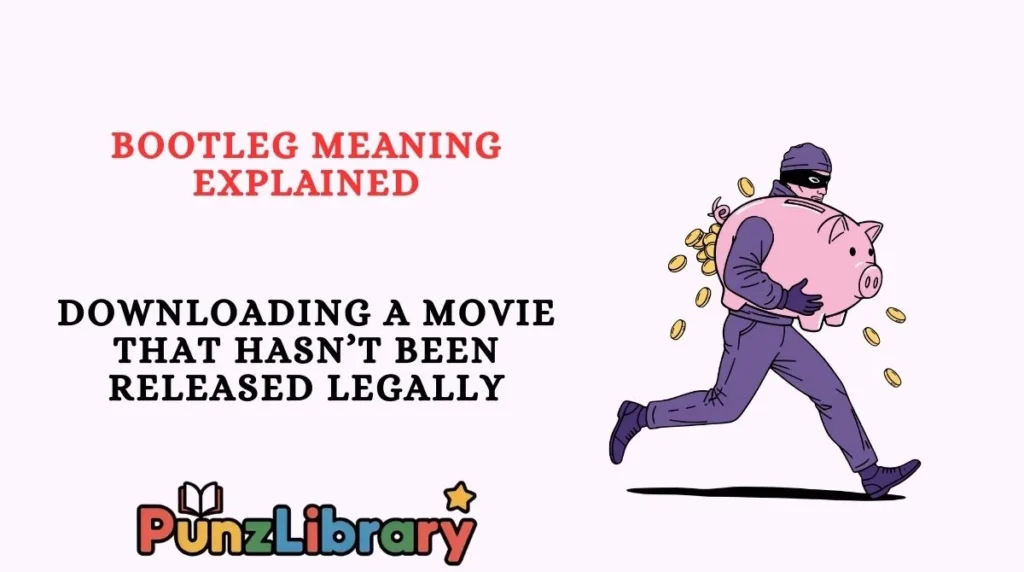
- Downloading a movie that hasn’t been released legally
- Watching a concert recorded secretly on someone’s phone
In all these cases, the product exists outside legal approval, even if it looks convincing.
Bootleg doesn’t always mean “bad quality,” but it always means unofficial.
Origin and Background of the Term
The word bootleg has a surprisingly colorful past.
Back in the late 1800s and early 1900s, people used tall boots to secretly hide alcohol bottles during prohibition in the United States. Smugglers would literally store liquor inside their boots’ legs.
That’s where the term was born.
Later, during the Prohibition era (1920–1933), illegal alcohol sellers became known as bootleggers. Over time, the word expanded beyond alcohol and entered music, film, fashion, and technology.
What started as physical smuggling slowly transformed into cultural slang for anything copied or distributed without approval.
Language evolves — and bootleg evolved right along with society.
How Bootleg Is Used in Daily Life
Today, the term is super casual and widely understood. You’ll hear it everywhere.
Here’s how people commonly use it:
- “This jersey looks bootleg, not the real deal.”
- “That movie site only has bootleg versions.”
- “These headphones work, but they’re clearly bootleg.”
- “Someone sold me a bootleg phone charger.”
- “That album leaked as a bootleg recording.”
- “It’s a bootleg copy, but it’s cheap.”
Notice something important?
People don’t always say it with anger. Sometimes it’s just informational or even humorous.
Emotional or Practical Meaning of Bootleg
Emotionally, bootleg carries mixed energy.
On one hand, it can feel disappointing — nobody likes being tricked. On the other hand, it can represent accessibility, especially in places where originals are expensive or unavailable.
Culturally, bootleg items often:
- Serve lower-income communities
- Spread art and music faster
- Create underground trends
But practically, bootlegs can:
- Hurt original creators
- Break legal and ethical rules
- Cause quality or safety issues
So the word lives in a gray area — part survival, part shortcut, part risk.
That complexity is why the term still matters today.
Similar or Related Terms
Here are words often confused with bootleg, explained clearly:
- Counterfeit – Illegal copy meant to deceive buyers
- Pirated – Unauthorized digital copying (movies, software)
- Knock-off – Low-quality imitation, often obvious
- Fake – Not authentic, can apply broadly
- Replica – Copy that may or may not be illegal
While they overlap, bootleg usually implies unauthorized distribution, not just imitation.
Common Misunderstandings About Bootleg
Let’s clear up some confusion.
- Bootleg doesn’t always mean low quality
Some bootlegs look surprisingly real. - Not every cheap item is bootleg
Affordable doesn’t always mean illegal. - Bootleg isn’t limited to physical products
It includes digital content too. - Buying bootleg isn’t always accidental
Some people do it intentionally to save money. - Bootleg and counterfeit aren’t identical
They’re related, but not interchangeable.
Understanding these nuances helps avoid mistakes.
Examples of Bootleg in Sentences
Here are natural, everyday examples:
- “I realized the watch was bootleg when it stopped working.”
- “That site only streams bootleg movies.”
- “He sells bootleg jerseys outside the stadium.”
- “The concert audio was a bootleg recording.”
- “This bag looks good, but it’s bootleg.”
- “She didn’t know the phone accessory was bootleg.”
- “Bootleg apps can be risky.”
- “That’s not official merch — it’s bootleg.”
Simple, real, and relatable.
Why Understanding Bootleg Meaning Matters Today
In a world full of online shopping, streaming, and fast content, knowing the bootleg meaning protects you.
It helps you:
- Avoid scams
- Support real creators
- Make informed purchases
- Understand modern slang
- Stay legally safe
More importantly, it builds awareness.
Knowing what’s real — and what’s not — gives you control. In an age of copies and shortcuts, knowledge is authenticity.
Frequently Asked Questions
What does bootleg mean in simple words?
Bootleg means something that’s copied or sold without permission, pretending to be real.
Is bootleg positive or negative?
Usually negative, but sometimes neutral depending on context.
Where is bootleg commonly used?
In movies, music, fashion, electronics, and online content.
Is bootleg formal or informal?
It’s informal, commonly used in everyday speech.
Why do people search for bootleg meaning?
Because it’s widely used but often misunderstood, especially online.
Its meaning has changed with the passage of time.
Conclusion
The word bootleg may sound casual, but its meaning carries real weight. It reflects how society balances creativity, access, legality, and ethics.
By understanding the bootleg meaning, you’re not just learning a word — you’re learning how the modern world works.
Stay curious. Stay informed.
Because knowing the truth — even behind small words — empowers smarter choices and keeps authenticity alive.