
Last updated on February 18th, 2026 at 03:01 am
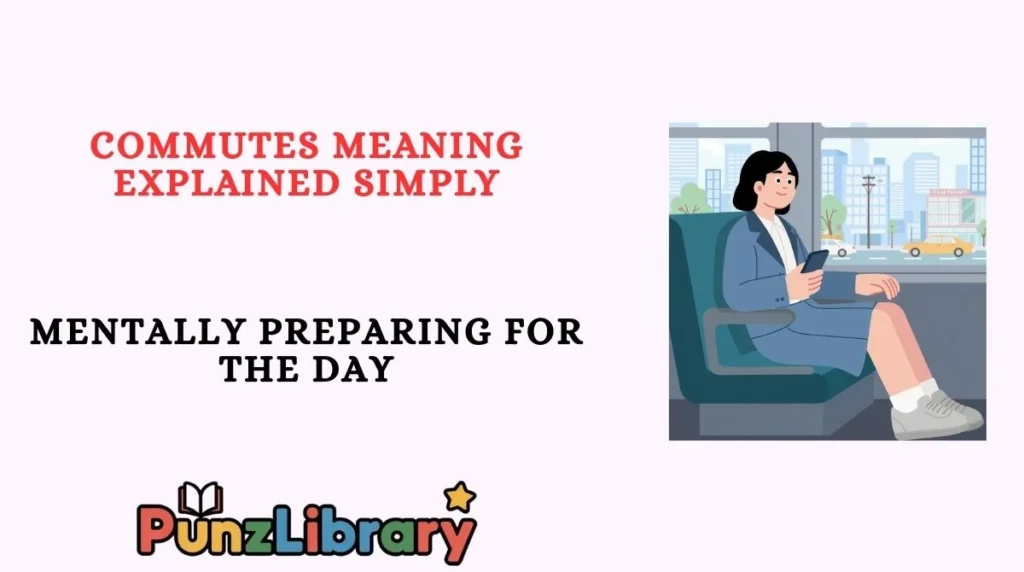
Picture this: your alarm goes off, you grab your bag, and step out the door—already thinking about traffic, the bus schedule, or that crowded train. That daily journey you make without much thought? That’s what we call a commute.
Understanding the commutes meaning isn’t just about vocabulary—it’s about recognizing a shared human experience millions of people live every single day.
Whether you work from an office, study at a university, or travel across town for a job, commuting quietly shapes your routine, mood, and even productivity. For some, it’s peaceful “me time.” For others, it’s exhausting and stressful. Either way, it matters.
In simple words, a commute is the regular travel between home and work (or study). But emotionally and practically, it’s so much more than that. Daily commutes affect our time, energy, and quality of life, often without us realizing it.
In this article, we’ll break down the commutes meaning in a friendly, real-life way—no dictionary stiffness, no robotic explanations. Just human language, relatable examples, and insights you can actually connect with.
What Does Commutes Meaning?
At its core, the commutes meaning refers to traveling regularly from your home to your workplace, school, or another fixed location—and back again. It’s usually something you do daily or several times a week.
Unlike vacations or random trips, a commute is routine. It’s predictable, familiar, and often unavoidable.
Real-life examples:
- If you drive 30 minutes every morning to your office and return home in the evening, that drive is your commute.
- Taking a bus from your neighborhood to university every weekday is commuting.
- Even walking ten minutes to a nearby job counts—it’s still a commute.
So, commuting isn’t about distance. It’s about regular movement tied to responsibility.
Origin and Background of the Term
The word commute comes from the Latin word commutare, meaning “to change” or “to exchange.” Over time, it evolved to describe the act of traveling back and forth—especially for work.
In the 19th century, as cities grew during the Industrial Revolution, people no longer lived right next to their workplaces. Factories, offices, and railways expanded. Workers began traveling daily from homes outside city centers. That’s when commuting became a common social pattern.
Trains played a huge role. Early railway passes were called “commutation tickets,” allowing workers to travel at lower costs. Slowly, the word “commute” became tied to working life and daily responsibility.
Today, whether it’s cars, buses, bikes, or remote logins, the idea of commuting still reflects how society organizes time, space, and labor.
How Commutes Are Used in Daily Life
You hear the word commute more often than you may realize. It appears in casual conversations, job listings, and lifestyle discussions.
Here are common, everyday uses:
- “My commute takes an hour each way.”
- “I’m trying to shorten my commute by moving closer.”
- “Remote work saved me from long commutes.”
- “She commutes by train every morning.”
- “The commute isn’t hard, but traffic is exhausting.”
People also describe commutes emotionally:
- Long commute
- Easy commute
- Stressful commute
- Peaceful commute
It’s not just a word—it’s a daily experience we all relate to.
Emotional or Practical Meaning of Commutes
Beyond the literal definition, commuting carries emotional weight.
For many people, a commute feels like lost time—hours spent stuck in traffic, waiting for buses, or standing in packed trains. Over time, this can affect mental health, energy levels, and even family life.
For others, commuting offers quiet moments:
- Listening to podcasts
- Enjoying music
- Mentally preparing for the day
- Unwinding before heading home
In modern culture, commutes are often linked with work-life balance. A shorter commute is seen as a luxury. A longer one is often viewed as a sacrifice for better income or opportunities.
So, the commutes meaning today isn’t just about distance—it’s about how that daily journey makes you feel.
Similar or Related Terms
Here are some words often connected to commutes, with clear differences:
- Travel – General movement from one place to another, not necessarily daily.
- Journey – Focuses more on the experience than routine.
- Transit – Public transportation systems or the act of passing through.
- Daily travel – A descriptive phrase, less formal.
- Remote work – The absence of commuting altogether.
Each term overlaps slightly, but commuting always implies routine and responsibility.
Common Misunderstandings About Commutes Meaning
Let’s clear up some confusion people often have:
- Commute only means long travel
Not true. Even a short walk counts if it’s regular. - Only office workers commute
Students, freelancers, interns—anyone traveling regularly can commute. - Commutes are always stressful
Some people actually enjoy their daily commute. - Remote workers don’t commute at all
Digital commutes still exist—switching from personal space to work mode. - Commute only applies to cities
People commute in towns and rural areas too.
Understanding these points helps you use the word more naturally and accurately.
Examples of Commutes in Sentences
Here are some friendly, natural examples:
- My commute used to be stressful until I changed my schedule.
- She listens to audiobooks during her morning commute.
- His new job has a much shorter commute.
- I don’t mind the commute—it gives me time to think.
- Traffic can easily double my commute time.
- Students often commute daily to nearby colleges.
- Remote work reduced millions of daily commutes worldwide.
- A peaceful commute can improve your whole day.
Why Understanding Commutes Meaning Matters Today
In today’s fast-paced world, understanding the commutes meaning helps you make smarter life decisions.
People now choose jobs not only based on salary but also:
- Commute length
- Transportation cost
- Mental health impact
- Work-life balance
Cities design infrastructure around commuting patterns. Employers offer flexible hours because of commute stress. Even real estate prices are affected by commute times.
Knowing what commuting truly means allows you to value your time better and advocate for healthier routines—whether that’s flexible hours, remote work, or relocating closer to opportunity.
Frequently Asked Questions
What does commutes meaning in simple words?
In simple words, commuting means traveling regularly from home to work, school, or another fixed place.
Is commutes positive or negative?
It can be both. Some commutes are calm and enjoyable, while others are stressful. It depends on distance, transport, and mindset.
Where is commutes commonly used?
The word is commonly used in:
- Work conversations
- Job descriptions
- Urban planning
- Daily life discussions
Is commutes formal or informal?
It’s neutral—perfectly fine in casual conversation and professional writing.
Why do people search for commutes meaning?
People search it to:
- Understand job listings
- Improve English vocabulary
- Write accurately
- Learn everyday language
Language evolves, and meanings grow richer with time and usage.
Conclusion
Understanding the commutes meaning goes far beyond defining a word. It helps us recognize a shared part of modern life—those daily journeys that quietly shape our routines, emotions, and choices.
Whether your commute is long or short, peaceful or tiring, it’s part of your story. And once you truly understand it, you can make choices that respect your time, protect your energy, and support your happiness.
Never underestimate the power of small daily moments—sometimes, growth begins in the journey itself. 🚶♂️✨