Have you ever described a person as “dominant” and noticed how the room reacted differently? Some people nodded in agreement, others looked uncomfortable. That reaction alone shows how powerful words can be, and why understanding their true meaning matters.
The phrase dominant meaning isn’t just about being in control. It’s about influence, presence, and sometimes perception. Whether you hear it in psychology, relationships, business, or everyday conversations, this term carries emotional and social weight.
In simple terms, dominant meaning refers to the strongest, most noticeable role, trait, or interpretation in a situation. It’s the thing that stands out most—often shaping how others respond. When we misunderstand it, we risk judging people unfairly or misreading situations entirely.
Understanding this concept can improve communication, confidence, and even empathy. Once you grasp it, you’ll start noticing how dominance quietly shapes conversations, decisions, and human behavior—sometimes without a single word being spoken.
What Does Dominant Meaning Mean?
At its core, dominant meaning refers to the most influential or prevailing interpretation, trait, or force in a particular context.
It doesn’t always mean loud, aggressive, or controlling. Sometimes dominance is subtle.
Think about a classroom. The teacher doesn’t shout nonstop, but their presence sets the tone. That’s dominance through authority, not noise.
Or imagine a conversation where one idea outweighs others. Even if many opinions exist, the dominant meaning is the one everyone remembers or acts on.
Real-life examples:
- In a group discussion, one person’s opinion guides the final decision.
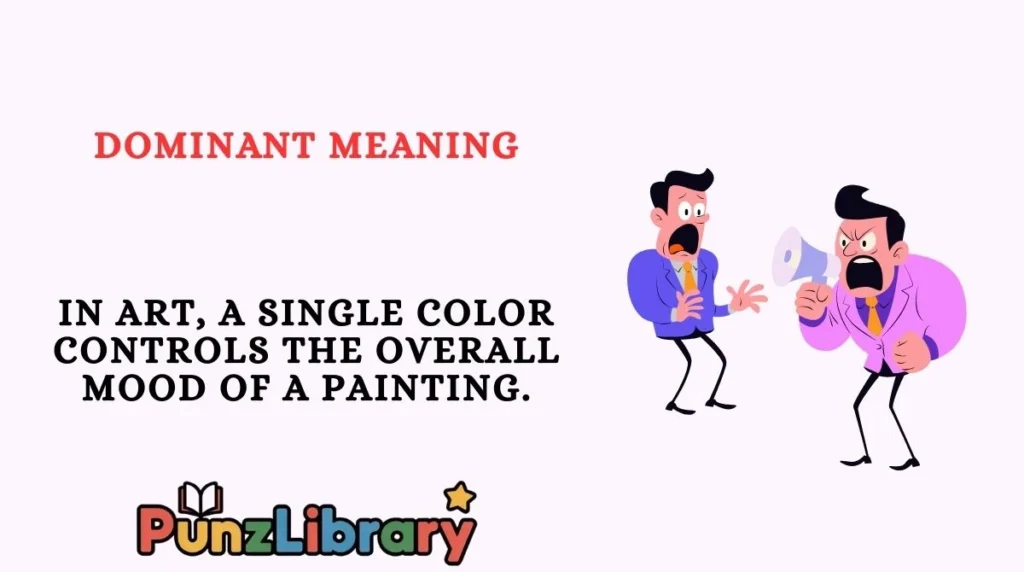
- In art, a single color controls the overall mood of a painting.
- In behavior, a calm but confident personality leads others naturally.
Dominant meaning is about impact, not volume.
Origin and Background of the Term
The word dominant comes from the Latin dominari, meaning “to rule” or “to have control.” Historically, it was tied to leadership, authority, and command—often in political or social structures.
Over time, language evolved. The term expanded beyond kings and rulers to describe ideas, traits, behaviors, and interpretations. Linguists began using “dominant meaning” to explain how one interpretation of a word or message becomes stronger than others in context.
In psychology, it took on a deeper layer—used to describe personality traits, power dynamics, and social influence. In modern usage, it’s everywhere: from media analysis to personal development.
What’s fascinating is how the meaning softened with time. Today, dominance isn’t always about force. It’s often about confidence, consistency, and clarity.
How Dominant Meaning Is Used in Daily Life
You encounter dominant meaning more often than you realize.
Here are some everyday examples:
- In meetings, the most confident speaker sets the direction
- In friendships, one personality often leads plans
- In movies, one theme overshadows subplots
- In arguments, the strongest emotion takes center stage
- In branding, one message defines a company
- In relationships, one partner may emotionally lead
Notice how dominance isn’t always intentional. Sometimes it simply emerges naturally.
That’s why understanding it helps you recognize influence—both yours and others’.
Emotional or Practical Meaning of Dominant Meaning
Emotionally, dominant meaning can affect how we feel about ourselves and others.
When someone is labeled “dominant,” it can feel empowering—or threatening—depending on context. In some cultures, dominance is admired as leadership. In others, it’s seen as arrogance.
Practically, recognizing dominant meaning helps you:
- Read social situations accurately
- Avoid misjudging quiet leadership
- Balance power in conversations
- Communicate more intentionally
In today’s fast-moving world, dominance often shows up as confidence, clarity, and emotional intelligence, not control.
Understanding this helps modern readers navigate workplaces, relationships, and online spaces with more awareness and respect.
Similar or Related Terms
- Authoritative – Commanding respect through knowledge or position
- Influential – Having the power to affect decisions or opinions
- Controlling – Forcing dominance (often negative)
- Assertive – Confidently expressing needs without aggression
- Prevalent – Most common or widespread
Each term overlaps but carries a slightly different tone. Dominant meaning focuses on what stands out the most, not how it’s enforced.
Common Misunderstandings About Dominant Meaning
Many people misinterpret this term. Let’s clear things up.
- Dominant means aggressive
→ Not true. Calm confidence can be dominant. - Dominance is always negative
→ Context defines value, not the word itself. - Only people can be dominant
→ Ideas, emotions, and themes can be dominant too. - Dominant equals loud
→ Quiet presence can be just as powerful. - Dominance requires authority
→ Influence doesn’t always come from titles.
Understanding these distinctions helps prevent unfair labeling.
Examples of Dominant Meaning in Sentences
- Confidence was the dominant meaning in her body language.
- The dominant meaning of the speech was unity, not politics.
- His calm tone became dominant during the heated discussion.
- Fear was the dominant emotion in the room.
- Leadership skills are her dominant trait at work.
- The dominant meaning of the film was resilience.
- His voice wasn’t loud, but it was dominant.
Each sentence shows dominance through impact, not force.
Why Understanding Dominant Meaning Matters Today
In a world driven by communication, perception matters more than ever.
Understanding dominant meaning helps you:
- Communicate ideas clearly
- Recognize hidden influence
- Lead without overpowering
- Interpret media and messages accurately
Social media, workplaces, and global conversations are shaped by dominant narratives. Knowing how dominance works allows you to question, reflect, and respond instead of reacting blindly.
It’s not about becoming dominant—it’s about recognizing what already is.
Frequently Asked Questions
What does dominant meaning mean in simple words?
It means the strongest or most noticeable idea, trait, or influence in a situation.
Is dominant meaning positive or negative?
It depends on context. It can be empowering or problematic based on how it’s used.
Where is dominant meaning commonly used?
In psychology, communication, education, leadership, and everyday conversations.
Is dominant meaning formal or informal?
It works in both. Professionals use it academically, while people use it casually too.
Why do people search for dominant meaning?
Because it appears in many fields and often feels confusing without context.
Meanings also change with passage of time, making clarity essential.
Conclusion
The dominant meaning of a word, action, or personality shapes how we experience the world—often more than we realize. Once you understand it, conversations become clearer, judgments soften, and communication feels more human.
Dominance doesn’t have to overpower. At its best, it guides, supports, and inspires. When you learn to recognize dominant meaning, you gain insight—not just into others, but into yourself.
And that awareness? It’s the kind of strength that quietly changes everything.