Have you ever paused mid-task and wondered, “What does it really mean to draw?” It might seem like a simple word, but “draw” carries layers of meaning that stretch far beyond just holding a pencil to paper.
From art and games to life decisions and emotional expressions, the term has a remarkable depth that touches both our daily lives and our cultural understanding.
Whether you’re a creative soul sketching on a canvas, a sports enthusiast calling a tied game, or someone trying to interpret a metaphorical “draw” in life, knowing the draw meaning can enrich your perspective.
Understanding this word isn’t just academic—it can enhance your communication, spark creativity, and even improve your decision-making.
In this article, we’ll explore the many dimensions of “draw,” its history, practical uses, emotional significance, and common misunderstandings. By the end, you’ll see why this simple word has a surprisingly profound impact.
What Does Draw Mean?
At its core, “draw” is all about pulling or attracting something toward you. But depending on the context, its meaning changes:
- In art: To create a picture with a pen, pencil, or brush.
Example: “She loves to draw landscapes during her free time.” - In games or competitions: When neither side wins, often called a tie.
Example: “The match ended in a draw, so both teams shared the trophy.” - In finances or resources: To withdraw or take out something.
Example: “He decided to draw money from his savings account.”
Draw is versatile, which is why it appears in so many areas of life. It’s about taking, pulling, or even creating, and its interpretation relies heavily on the situation.
Origin and Background of the Term
The word “draw” comes from the Old English word “dragan,” which means “to drag, pull, or carry.” Centuries ago, people literally used it to describe moving objects by pulling them—like drawing water from a well or dragging a cart.
Over time, this practical meaning evolved. By the Middle Ages, “draw” had expanded into abstract uses, like drawing lots, drawing swords, or drawing attention. Artists in Renaissance Europe added yet another dimension, using it to describe the act of creating images on paper or canvas.
This historical evolution shows how human activity shapes language—from physical actions to creative and symbolic meanings. Understanding the origin makes the word richer, connecting our modern use to centuries of human culture.
How Draw Is Used in Daily Life
You’d be surprised how often “draw” pops up in everyday conversations:
- In art and hobbies: “I like to draw cartoons for my friends.”
- In sports: “Our soccer game ended in a draw.”
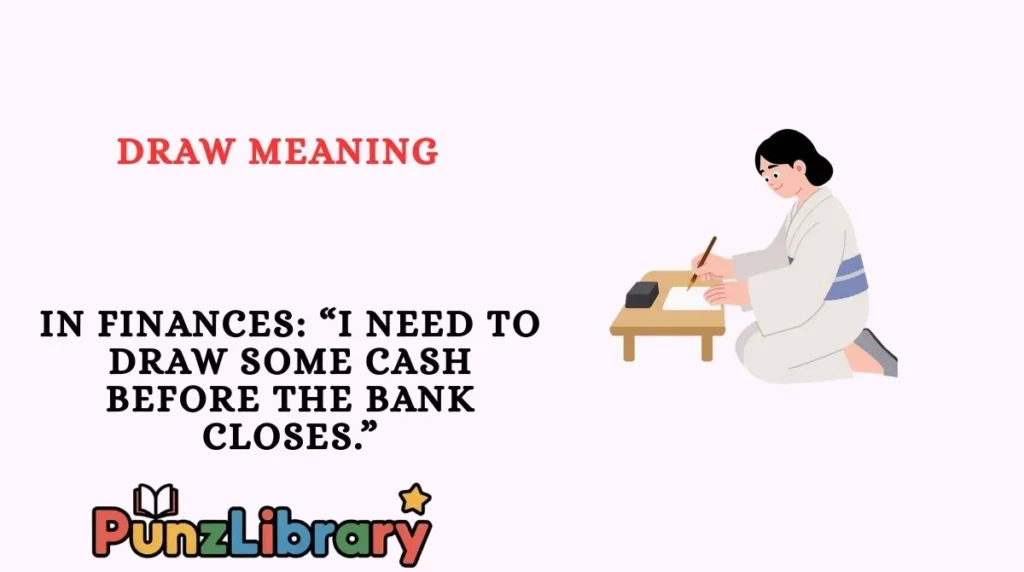
- In finances: “I need to draw some cash before the bank closes.”
- In contests or random selection: “They will draw names to pick a winner.”
- In attracting attention: “Her speech really draws people in.”
- In music or writing: “He can draw inspiration from nature easily.”
Notice how each use still carries the core idea of pulling or attracting, whether it’s a pencil, attention, or even luck.
Emotional or Practical Meaning of Draw
Beyond its literal uses, draw has emotional and symbolic weight. When someone says, “I feel drawn to that person,” it’s about magnetic attraction or instinctive connection. Psychologists note that people often use the word metaphorically to describe intuition, emotional pull, or preference.
Culturally, drawing attention or drawing on resources also shows human ingenuity and adaptability. For example, communities historically “drew water” from wells or “drew inspiration” from their environment, showing how fundamental the concept is to survival and creativity.
In modern life, recognizing this emotional meaning can help you navigate relationships, motivation, and personal growth.
Similar or Related Terms
- Sketch – Usually lighter, less detailed than drawing.
- Pull – Physical action, literal version of draw.
- Attract – Draw in a figurative sense.
- Tie – In sports, a draw means no winner.
- Withdraw – Financial sense, drawing money or resources.
- Inspire – Draw inspiration, figurative creativity pull.
Each term shares the idea of moving, attracting, or creating, but the context changes how we interpret it.
Common Misunderstandings About Draw
- Draw only refers to art – Not true; it’s used in sports, finance, and metaphorical contexts.
- Draw always means a tie – Sometimes it means to pull or attract.
- Drawing is always creative – You can “draw water” or “draw conclusions” too.
- Draw is formal language – It’s used in both casual and formal speech.
- Draw implies physical action only – Many uses are emotional or metaphorical.
- Draw is passive – In art or life, drawing often requires skill, effort, and intention.
Clarifying these misconceptions helps you use the word confidently in any setting.
Examples of Draw in Sentences
- “She loves to draw portraits of her friends on weekends.”
- “The lottery will draw a winner at 5 PM.”
- “I always feel drawn to nature during stressful times.”
- “The football match ended in a draw, leaving fans excited and nervous.”
- “He decided to draw cash for the trip.”
- “Teachers often ask students to draw conclusions from the lesson.”
- “The smell of fresh bread draws people into the bakery.”
- “Artists can draw inspiration from even the simplest things.”
Why Understanding Draw Matters Today
Understanding draw meaning isn’t just about vocabulary—it’s about communication, creativity, and cultural awareness. From professionals giving presentations to writers seeking metaphors, knowing the nuances helps you express ideas more clearly.
In modern life, where attention is scarce, being able to draw people in—literally or figuratively—can make a huge difference in relationships, work, and personal growth. The term also reminds us of human adaptability, showing how we can pull resources, ideas, and inspiration from the world around us.
Frequently Asked Questions
What does draw mean in simple words?
It means to pull, attract, or create something, depending on the context.
Is draw positive or negative?
It can be either, depending on usage. Drawing inspiration is positive, while a draw in a game is neutral.
Where is draw commonly used?
In art, sports, finance, and everyday expressions like drawing attention or conclusions.
Is draw formal or informal?
It’s both. You’ll hear it in casual conversation, official documents, and creative writing.
Why do people search for draw?
People look it up to understand the multiple meanings, use it correctly, or explore its emotional and practical applications.
Conclusion
The word draw is far more than just a dictionary entry. It’s a bridge between action, emotion, and creativity, connecting centuries of human experience to our daily lives.
Next time you pick up a pencil, watch a match, or feel instinctively pulled toward something, remember—you’re living the rich, multifaceted meaning of draw.
Life has a way of drawing us to the right opportunities—sometimes all it takes is noticing the pull.