Have you ever felt that buzz of excitement before something important—like the first day at a new job, meeting someone special, or starting a long-awaited project? That feeling is closely tied to the word “eager.”
While most people might have a vague idea of what eager means, understanding it fully can actually help you communicate emotions better, connect with others, and even motivate yourself.
In simple terms, being eager isn’t just about wanting something—it’s about being genuinely enthusiastic, alert, and ready to take action. It’s a mix of anticipation, excitement, and readiness all rolled into one.
Imagine a child waiting for the first bite of a chocolate cake or a traveler counting down the days for a dream vacation. That vibrant, almost impatient excitement captures the essence of eagerness.
In this article, we’ll dive into the true meaning of eager, explore its origins, practical uses, emotional significance, and even clear up common misconceptions. By the end, you’ll not only know the definition but also appreciate why this simple word can pack a powerful punch in daily life.
What Does Eager Mean?
At its core, eager describes a strong desire to do or experience something, often accompanied by energy and enthusiasm. Unlike mere interest, eagerness carries a sense of urgency and excitement.
Here are a few real-life examples:
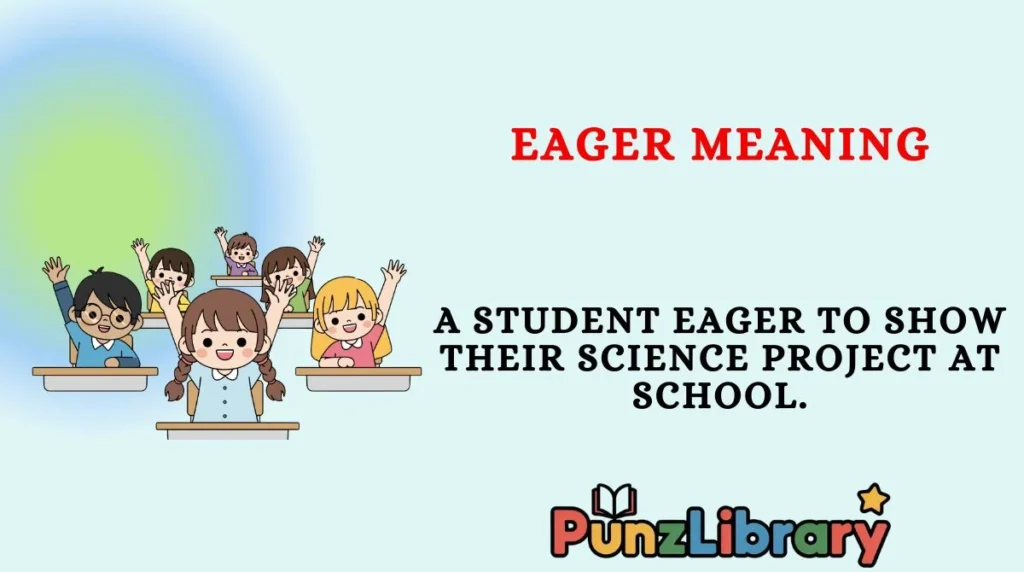
- A student eager to show their science project at school.
- A dog wagging its tail, eager to go for a walk.
- Someone eager to learn a new language and starting lessons the same day.
It’s important to note that eagerness is proactive—it shows readiness and a positive, enthusiastic attitude rather than hesitation or passivity.
Origin and Background of the Term
The word “eager” has roots in Middle English and traces back to the Old French word aigre, which literally meant “sharp” or “keen.” In early usage, it often referred to a keen sense of desire or intensity—not just for objects or activities, but also for ideas and experiences.
Interestingly, in the 16th century, people sometimes used eager to describe sharpness of emotion, not just excitement. Imagine someone writing, “He was eager to embrace adventure,” signaling both readiness and intensity of feeling. Over time, the word evolved into the positive, enthusiastic sense we commonly use today.
This rich history shows that eagerness has always been tied to passion, intensity, and a readiness to act, making it more than just a casual emotion—it’s a mindset.
How Eager Is Used in Daily Life
Eagerness isn’t limited to formal situations—it pops up everywhere in daily life. Here’s how:
- Workplace Motivation: A colleague might be eager to present their idea in a team meeting.
- Learning and Education: A child eager to answer questions in class.
- Travel: Tourists eager to explore new cities or try local cuisines.
- Hobbies: Someone eager to start a painting or a new workout routine.
- Relationships: Meeting a friend after months of separation can make you eager to catch up.
- Personal Goals: People often feel eager when setting out to achieve something meaningful, like finishing a marathon.
Notice how eager always involves anticipation—it’s the emotional spark that makes ordinary moments exciting.
Emotional or Practical Meaning of Eager
Why does understanding eager matter? Because it’s more than just a word—it’s a window into human emotion and motivation.
Emotionally, being eager signals positivity, openness, and engagement. People who are eager tend to inspire others, create energy in groups, and often achieve goals faster because they approach tasks with enthusiasm.
Practically, recognizing eagerness in others can help in communication, leadership, and teamwork. For example, managers can channel an employee’s eagerness into productive projects, while educators can engage eager students in interactive learning.
In today’s fast-paced world, eagerness is also linked to mental resilience. Being eager shows you’re ready to face challenges, rather than avoiding them—a trait that’s increasingly valuable in both personal and professional life.
Similar or Related Terms
Here are some words closely related to eager, with subtle differences:
- Keen: Strong interest or enthusiasm (often intellectual).
- Excited: Emotional thrill or anticipation, sometimes short-lived.
- Enthusiastic: Active interest and enjoyment in doing something.
- Anxious: Desire mixed with worry (can be negative).
- Motivated: Driven to act, often goal-oriented.
While these words overlap, eager uniquely combines excitement, readiness, and positivity.
Common Misunderstandings About Eager
Many people confuse eager with similar words, but it has unique nuances:
- Eager ≠ Impatient – Eager is positive, impatience can feel negative.
- Eager ≠ Nervous – You can be eager without being anxious.
- Eager ≠ Overexcited – True eagerness is balanced enthusiasm, not uncontrolled energy.
- Eager ≠ Curious – Curiosity is interest; eagerness adds action and urgency.
- Eager ≠ Greedy – Greed focuses on self-interest; eagerness can be selfless.
Clarifying these helps you use the word effectively in conversations and writing.
Examples of Eager in Sentences
Here are some natural, everyday sentences using eager:
- She was eager to meet her new colleagues on the first day.
- The puppy jumped up, eager for its evening walk.
- He’s eager to try the new Italian restaurant downtown.
- Students were eager to participate in the science fair.
- I’m eager to hear about your trip to Japan!
- They were eager to start their weekend hiking adventure.
- She felt eager to learn guitar after watching her favorite musician.
- We were eager to celebrate the festival with friends and family.
Notice how each sentence communicates enthusiasm, anticipation, and readiness.
Why Understanding Eager Matters Today
In today’s world of constant distractions, understanding eager meaning is surprisingly valuable. Recognizing eagerness in yourself or others can:
- Boost productivity and focus.
- Strengthen personal and professional relationships.
- Improve communication by expressing emotions clearly.
- Enhance learning and creativity by channeling energy positively.
Eagerness is more than a feeling—it’s a tool that can shape your actions and experiences in meaningful ways.
Frequently Asked Questions
What does eager mean in simple words?
Eager means really wanting something and being excited to do it. It shows readiness and enthusiasm.
Is eager positive or negative?
It’s generally positive, reflecting excitement, energy, and motivation.
Where is eager commonly used?
It’s used in daily conversations, workplaces, classrooms, relationships, and personal goals.
Is eager formal or informal?
It’s versatile—you can use it both in casual conversations and professional writing.
Why do people search for eager?
People want to understand its emotional nuance, use it correctly, or describe feelings effectively.
Conclusion
Understanding eager meaning goes beyond knowing a definition—it’s about recognizing and embracing energy, anticipation, and enthusiasm in everyday life. Whether you’re learning, working, or connecting with others, eagerness can inspire action and make experiences more fulfilling.
So, the next time you feel that spark of excitement, don’t hold back—embrace your eagerness and let it drive you forward. After all, life feels richer when we approach it with enthusiasm and readiness.