Death is an inevitable part of life, yet humans have always sought ways to preserve the memory and dignity of the departe
. One of the most fascinating practices in this regard is embalming—a procedure that has intrigued cultures, historians, and scientists for centuries. But what exactly is embalming, and why does it matter beyond the funeral industry?
In this comprehensive guide, we’ll explore the true meaning of embalming, its history, practical applications, emotional significance, and the common misconceptions that often surround it.
Whether you’re a curious learner, a student of mortuary science, or someone trying to understand cultural practices, this article will give you a clear, human-centered understanding of embalming.
By the end, you’ll see that embalming is not just a technical process—it’s a blend of science, respect, and tradition that reflects how humans cope with mortality.
What Does Embalming Mean?
At its core, embalming is the process of preserving a deceased body to slow decomposition and maintain a lifelike appearance for viewing, funerals, or scientific purposes. It involves the careful use of chemicals, sanitation techniques, and artistry to ensure the body is treated with dignity and respect.
Think of it like this: embalming is both science and art, where chemistry meets compassion. For instance:
- A family wishes to hold a public viewing for a loved one; embalming ensures the body appears natural and peaceful.
- Medical schools use embalmed bodies to teach anatomy safely and effectively without rapid decay.
- Historical figures, like pharaohs, were preserved to honor their legacy—ancient embalming laid the foundation for modern techniques.
Unlike simple refrigeration, embalming is about long-term preservation, restoring the natural look of the deceased and allowing families a chance to say goodbye in a respectful setting.
Origin and Background of the Term
The term “embalming” comes from the Latin word inbalmare, which means “to treat with balsam or aromatic substances.” Its roots trace back thousands of years, with different cultures developing their unique methods.
Ancient Egypt is perhaps the most famous example. Pharaohs and nobility underwent elaborate embalming processes, including organ removal, chemical treatments, and wrapping in linen. Their goal was not only to preserve the body but also to prepare it for the afterlife—a blend of religion, culture, and science.
In Europe, embalming evolved during the Renaissance when anatomists needed long-lasting cadavers for study. By the 19th century, modern embalming methods emerged, combining chemical preservatives with hygienic practices, especially during wars to transport soldiers’ bodies home.
Imagine a 19th-century funeral director carefully applying chemicals to preserve a loved one’s features—a mixture of precision, care, and respect. This combination of science and human touch defines embalming even today.
How Embalming Is Used in Daily Life
Though embalming may seem removed from everyday life, it intersects with many human experiences:
- Funerals and Memorials: Embalming allows families to hold viewings and ceremonies, providing closure and emotional healing.
- Medical Education: Embalmed cadavers are essential in teaching students about anatomy, surgery, and pathology.
- Historical Preservation: Some embalmed bodies are studied by archaeologists to understand ancient cultures.
- Disaster Management: Embalming helps preserve bodies during natural disasters or accidents when immediate burial isn’t possible.
- Forensic Investigations: Preserved bodies aid in autopsies and criminal investigations, helping solve cases with scientific accuracy.
Even outside professional settings, embalming reflects our desire to honor, learn, and remember—showing its relevance in both personal and societal contexts.
Emotional or Practical Meaning of Embalming
Beyond the technical aspect, embalming carries deep emotional significance. Losing a loved one is traumatic, and embalming offers families a chance to say goodbye while seeing their loved one in a peaceful state.
Practical implications include:
- Peace of Mind: Families can plan funerals without rushing, knowing the body is preserved.
- Cultural and Religious Practices: Some traditions require viewing or delayed burial, making embalming essential.
- Scientific Contribution: Embalmed bodies support medical research, ultimately benefiting society.
In short, embalming bridges human emotion and scientific necessity, allowing us to honor the dead while benefiting the living.
Similar or Related Terms
- Mummification: Ancient method of preservation, often religiously motivated, using natural or chemical techniques.
- Cryonics: Modern preservation of bodies at very low temperatures, usually for future revival (experimental).
- Funeral Preparation: Broader term encompassing embalming, dressing, and cosmetology of the deceased.
- Preservation Techniques: Includes embalming, refrigeration, freeze-drying, or plastination for study purposes.
While related, embalming is unique for its combination of chemical science, hygiene, and aesthetic presentation.
Common Misunderstandings About Embalming
- “It’s just for vanity.” False—embalming serves hygiene, preservation, and educational purposes, not just appearances.
- “It’s painful for the deceased.” Not true—the process is entirely post-mortem.
- “Only rich people can afford it.” Many funeral services offer affordable embalming options.
- “It’s a modern invention.” Embalming has existed for thousands of years in various cultures.
- “It’s unsafe.” When handled by professionals, embalming is completely safe and hygienic.
- “It prevents burial forever.” Embalming slows decomposition but does not stop it; burial or cremation still follows.
Understanding these myths ensures people approach embalming with respect and clarity, not fear or misinformation.
Examples of Embalming in Sentences
- The funeral home offered embalming to ensure a natural appearance for the viewing.
- Medical students learned anatomy through embalmed cadavers.
- Ancient Egyptians mastered embalming to prepare their pharaohs for the afterlife.
- Embalming allows families to spend more time with loved ones before burial.
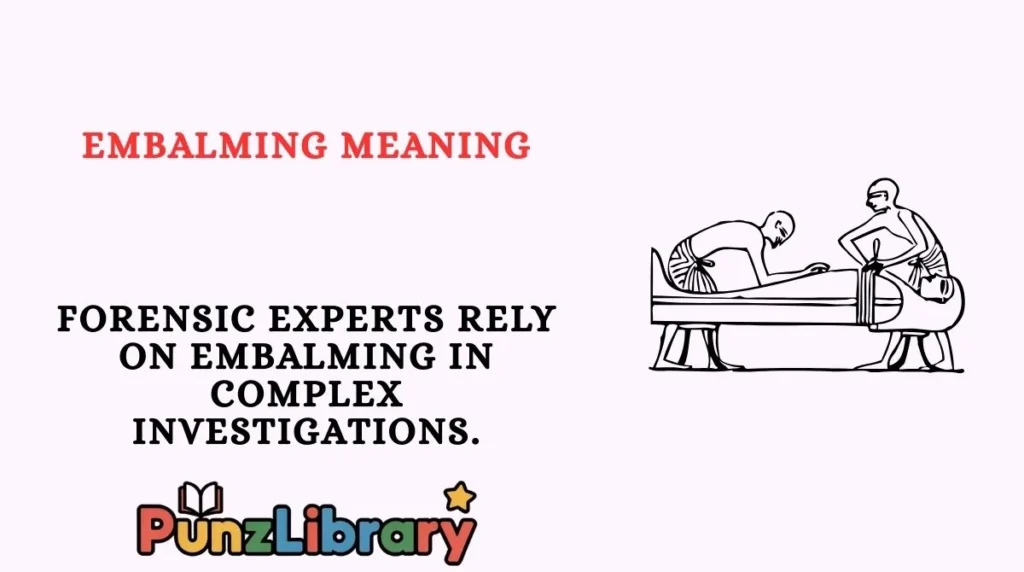
- Forensic experts rely on embalming in complex investigations.
- The museum displayed an embalmed animal as part of a historical exhibit.
- The embalmer carefully treated the body with respect and precision.
- Modern embalming combines science with compassion to honor the deceased.
Why Understanding Embalming Matters Today
In a fast-paced world, we rarely pause to consider how societies care for the dead. Understanding embalming teaches us about history, science, and human emotion. It reminds us that death is part of life, and honoring the deceased is a reflection of our empathy and cultural awareness.
For families, embalming offers peace and dignity. For professionals, it’s a scientific necessity. And for society, it’s a bridge between tradition, education, and respect. In short, embalming is not just a procedure—it’s a window into humanity’s values, science, and compassion.
Frequently Asked Questions
What does embalming mean in simple words?
Embalming is the process of preserving a body after death to slow decay and maintain a lifelike appearance for funerals, research, or historical purposes.
Is embalming positive or negative?
It’s positive, as it serves emotional, cultural, and scientific purposes, helping families, professionals, and society honor the deceased.
Where is embalming commonly used?
Funeral homes, hospitals, medical schools, museums, disaster sites, and forensic investigations worldwide.
Is embalming formal or informal?
It’s formal, requiring trained professionals, but its effects can impact everyday life by allowing families time to grieve.
Why do people search for embalming?
Curiosity about funeral practices, medical education, historical preservation, cultural significance, or understanding post-mortem care.
Conclusion
Embalming is more than a technical procedure—it’s a blend of science, compassion, and tradition. From preserving a loved one’s dignity to contributing to medical education, embalming touches lives in multiple ways. By understanding its meaning and purpose, we gain not only knowledge but also empathy, respect, and a deeper appreciation for life and death. Remember: honoring the dead reflects our humanity and teaches us how to live with care and intention.