Have you ever heard someone say, “Don’t fritter away your time,” and wondered what fritter meaning actually is? Or maybe you’ve enjoyed a crispy apple fritter and thought the word sounded oddly… playful. You’re not alone.
The word fritter pops up in daily conversations, food menus, and life advice, yet many people don’t fully understand how flexible it really is. It’s one of those words that quietly wears two different personalities — one delicious and one cautionary.
In simple terms, fritter meaning changes depending on how it’s used. It can describe a tasty fried snack, or it can warn us about wasting something valuable without realizing it. That contrast makes the word both fascinating and useful.
Understanding this word isn’t just about vocabulary. It helps you communicate more clearly, avoid misunderstandings,
and sound more confident in both casual and professional conversations. Let’s break it down in a human, friendly, no-dictionary-needed way.
What Does Fritter Meaning Really Mean?
At its core, fritter meaning has two main uses — and context is everything.
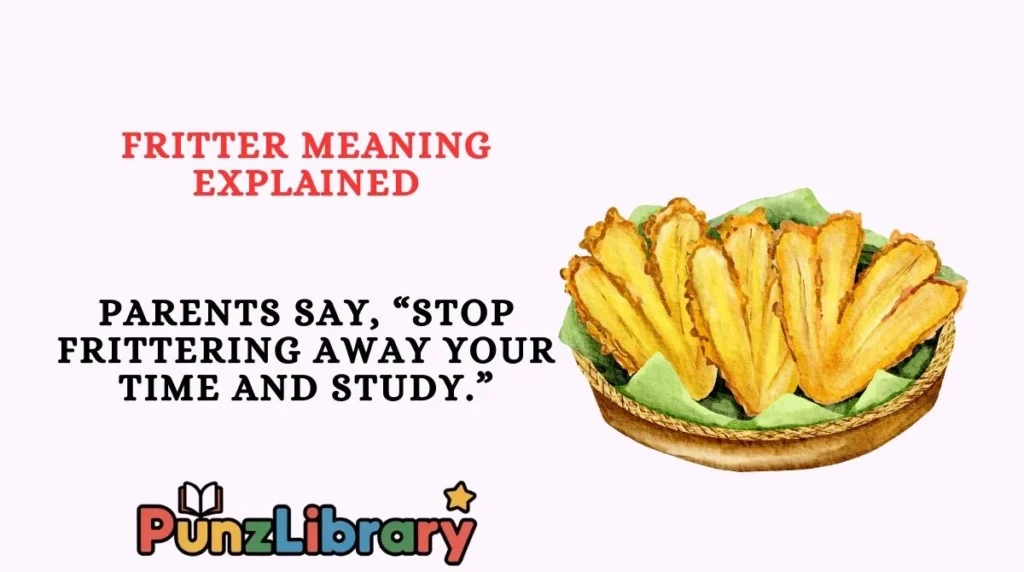
First, fritter can be a noun, referring to a small piece of food, usually fried. Think of an apple fritter, corn fritter, or banana fritter. They’re often crispy on the outside and soft inside.
Second, fritter can be a verb, meaning to waste time, money, energy, or opportunities on unimportant things.
Real-life examples make it clearer:
- You enjoy a warm apple fritter with coffee ☕
- You fritter away an entire afternoon scrolling on your phone
Same word. Totally different meaning.
That’s why understanding fritter meaning depends on how it’s used, not just what it says.
Origin and Background of the Term
The word fritter has a long, flavorful history.
It comes from the Old French word “friture,” which means fried food. That itself traces back to the Latin word “frigere,” meaning to fry. So originally, fritter meaning was purely about cooking.
Centuries ago, fritters were simple — bits of dough fried in oil, often eaten during festivals or special occasions. They were small treats, not daily meals.
Over time, the word evolved. People noticed something interesting: fritters were tiny pieces, eaten quickly and gone just as fast. That idea gradually shaped the metaphorical meaning.
By the 1600s, to fritter away meant breaking something into small, insignificant parts until nothing meaningful remained.
Language does that — it grows from daily life, food, habits, and human behavior. That’s how fritter meaning gained depth.
How Fritter Is Used in Daily Life
You might be using this word more than you think.
Here’s how fritter meaning shows up naturally in everyday situations:
- Parents say, “Stop frittering away your time and study.”
- Financial advisors warn about frittering money on small expenses.
- Fitness coaches talk about frittering energy on excuses.
- Friends laugh about frittering weekends away doing nothing.
- Menus list apple fritters as comfort food.
Short sentences. Clear meaning. Real life.
The word works because it feels human and relatable. We all waste things sometimes. And we all enjoy fried food occasionally too.
Emotional or Practical Meaning of Fritter
This is where fritter meaning becomes powerful.
Emotionally, the verb fritter carries a gentle warning, not harsh judgment. It’s not about failure. It’s about unnoticed loss.
You don’t intend to waste time.
You don’t plan to waste potential.
It just… slips away.
That’s why the word resonates. It reflects modern life, where distractions are everywhere and moments disappear quietly.
Practically, understanding this meaning helps you:
- Make better choices
- Value your time
- Notice small habits that add up
Sometimes a single word can remind us to pause and choose more wisely.
Similar or Related Terms
Here are words often confused with fritter, explained clearly:
- Waste – General loss, often larger or obvious
- Squander – Careless, irresponsible waste (stronger than fritter)
- Spill – Physical loss, usually accidental
- Dawdle – Moving slowly or delaying
- Loiter – Staying somewhere without purpose
Fritter is softer. More subtle. More psychological.
Common Misunderstandings About Fritter Meaning
Let’s clear up some confusion.
Misconception 1: Fritter only means food
→ Nope. It’s also a powerful verb.
Misconception 2: It’s always negative
→ As food, it’s neutral or positive.
Misconception 3: It means intentional waste
→ Usually unintentional.
Misconception 4: It’s outdated
→ Still widely used today.
Misconception 5: It’s informal
→ It fits both formal and casual language.
Understanding these nuances makes your communication sharper.
Examples of Fritter in Sentences
Here are natural, everyday examples:
- She didn’t want to fritter away her savings on impulse buys.
- We frittered the evening away talking and laughing.
- Apple fritters are my favorite comfort food.
- He realized he had frittered years worrying about things that never happened.
- Don’t fritter your energy on arguments that don’t matter.
- The café serves fresh fritters every morning.
- Time frittered away faster than expected.
Simple, human, relatable.
Why Understanding Fritter Meaning Matters Today
Today’s world is loud, fast, and distracting.
Understanding fritter meaning helps you become more intentional. When you know the word, you recognize the pattern — time slipping away in tiny pieces.
In education, it improves reading comprehension.
In work, it sharpens communication.
In life, it encourages mindfulness.
Words shape how we think. And fritter reminds us that small choices matter — every single day.
Frequently Asked Questions
What does fritter mean in simple words?
It means either a small fried food or wasting something little by little.
Is fritter positive or negative?
As food, it’s neutral or positive. As an action, it’s usually negative.
Where is fritter commonly used?
In everyday English, writing, advice, and food contexts.
Is fritter formal or informal?
It works in both casual speech and formal writing.
Why do people search for fritter meaning?
Because it has dual meanings and appears often in real life.
And yes — meanings can change with passage of time.
Conclusion
So, what’s the takeaway?
Fritter meaning isn’t just about food or wasting time. It’s about awareness. It shows how language reflects human habits — the sweet moments we enjoy and the quiet losses we don’t notice until later.
Once you understand this word, you’ll hear it differently. You’ll use it more intentionally. And maybe — just maybe — you’ll stop frittering away the things that matter most.
Because time, energy, and joy are precious.
And you deserve to spend them wisely. 🌱