Have you ever heard someone exclaim, “What in tarnation?!” and wondered what on earth they meant?
Maybe it sounded funny, old-fashioned, or even a little dramatic.
The word tarnation might feel out of place in modern conversation, but it has a fascinating history and a unique role in English expressions.
In this article, we’ll uncover the tarnation meaning, explore where it comes from, see how people use it today, and even look at common misconceptions.
By the end, you’ll know exactly how to understand and use this quirky, expressive word—plus, you might even find it fun to drop into conversation for a little color and charm.
Whether you’re a lover of language, curious about historical expressions, or just want to impress friends with a unique word, this guide will give you all the insights you need.
What Does Tarnation Mean?
At its core, tarnation is an old-fashioned exclamation used to express surprise, anger, or disbelief. Think of it as a milder, sometimes humorous way of saying “what the heck?” or “what on earth?”
Here are a few everyday examples:
- Someone finds a broken vase on the floor and says, “What in tarnation happened here?”
- A driver narrowly misses an accident and exclaims, “Well, tarnation!”
- You open your fridge to find your favorite snack gone and mutter, “Tarnation!”
It’s colorful and expressive, adding emotion without being offensive. Unlike curse words, tarnation keeps things lighthearted and fun.
Origin and Background of the Term
The history of tarnation is just as interesting as its sound. It dates back to 18th and 19th century America, particularly in rural and Southern speech. The word is actually a mild euphemism, derived from “eternal damnation.” People wanted a way to express strong feelings without using outright blasphemy, so “tarnation” was born as a more socially acceptable alternative.
Imagine pioneers or farmers in the 1800s, reacting to spilled milk, broken fences, or mischievous animals—saying “What in tarnation?!” would convey their frustration while keeping manners intact. Over time, it became a fixture in folk speech, literature, and even comedy, especially in Southern American culture.
In short, tarnation is a word that survived centuries because it’s vivid, memorable, and emotionally expressive without crossing social boundaries.
How Tarnation Is Used in Daily Life
While tarnation may sound old-fashioned, it’s surprisingly versatile in conversation today. Here’s how you might encounter or use it:
- Expressing Surprise:
“What in tarnation is going on in this kitchen?” - Showing Frustration:
“Tarnation! I forgot my keys again.” - Storytelling Flair:
Adding tarnation to a tale gives it a humorous, folksy tone. - Playful Swearing Substitute:
Kids or family-friendly content can use it instead of curse words. - Emphasizing the Unexpected:
“Well, tarnation, I didn’t see that coming!”
Using it sparingly adds personality and charm to your speech, making it memorable without being harsh.
Emotional or Practical Meaning of Tarnation
Beyond literal meaning, tarnation carries emotional weight. It communicates strong feeling in a polite or humorous way. Unlike modern swearing, which can escalate tension, tarnation softens the blow, making it playful rather than aggressive.
For instance:
- A grandparent might exclaim “Tarnation!” when their grandchild hides the TV remote—funny, relatable, and expressive.
- In storytelling, authors use it to convey rustic charm or character personality.
Practically, tarnation is a tool for expressing emotion without offending anyone, making it a clever linguistic trick that’s survived generations.
Similar or Related Terms
- Gosh: Mild surprise or disbelief, often religiously toned down like tarnation.
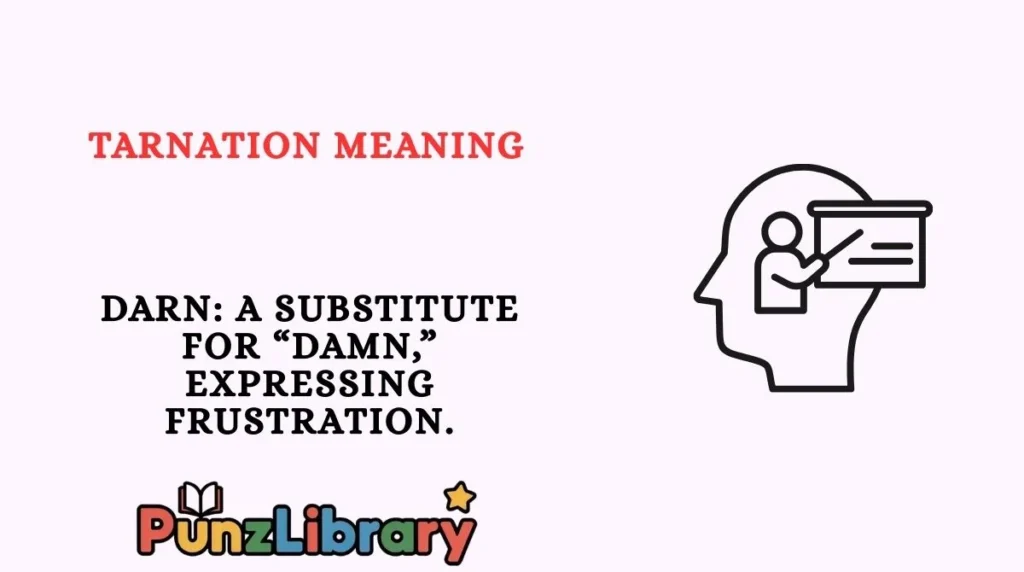
- Darn: A substitute for “damn,” expressing frustration.
- Heck: A softer version of “hell,” popular in everyday speech.
- Blazes: As in “What the blazes?!”—an exclamation of shock or anger.
While these words share similar functions, tarnation stands out for its old-timey, folksy charm and slightly humorous edge.
Common Misunderstandings About Tarnation
- It’s a curse word.
Not exactly. It’s a euphemism derived from “eternal damnation,” but socially acceptable. - Only old people say it.
While more common in historical speech, anyone can use it for humor or style. - It has a serious religious meaning.
Originally euphemistic, today it’s mostly secular. - It can’t be used in modern writing.
Actually, it works beautifully in dialogue, storytelling, or playful social media posts. - It’s interchangeable with any exclamation.
Context matters—tarnation works best for surprise, frustration, or disbelief, not joy or sadness.
Examples of Tarnation in Sentences
- “What in tarnation is that noise outside?”
- “Tarnation! I left my phone in the car.”
- “Well, tarnation, that’s the last thing I expected!”
- “He spilled the milk, and I just shouted, ‘Tarnation!’”
- “What in tarnation are you wearing?”
- “Tarnation, I missed the bus again.”
- “She looked at the messy kitchen and said, ‘Well, tarnation!’”
Each example shows how the word adds emphasis, charm, or humor to ordinary situations.
Why Understanding Tarnation Matters Today
Language evolves, but words like tarnation remind us of history, culture, and emotional expression. Knowing its meaning:
- Adds color to conversation.
- Connects you to historical American English.
- Enhances storytelling and humor.
- Provides a polite alternative to swearing.
In a world where communication is often rushed and blunt, sprinkling in words like tarnation can make speech more expressive and memorable.
Frequently Asked Questions
What does tarnation mean in simple words?
It’s an old-fashioned way to say “what the heck?” or “what on earth?”—used to express surprise, frustration, or disbelief.
Is tarnation positive or negative?
Neutral to slightly humorous—it conveys emotion without being offensive.
Where is tarnation commonly used?
Mostly in Southern American English, historical writing, stories, or casual conversation for humor.
Is tarnation formal or informal?
Informal. Best used in spoken English, dialogue, or playful writing.
Why do people search for tarnation?
Curiosity about old words, historical expressions, or ways to add charm to conversation.
Conclusion
Tarnation isn’t just a quirky old word—it’s a bridge to history, culture, and expressive communication.
Whether you use it to add humor, emphasize surprise, or charm friends with vintage flair, it reminds us that language can be playful and meaningful at the same time.
So next time something shocks or frustrates you, let out a hearty, “Tarnation!”—and enjoy the colorful power of words.