Have you ever loved the idea of camping but hated the reality of sleeping bags, insects, and no proper bathroom? You’re not alone — and that’s exactly where glamping comes in.
The glamping meaning goes far beyond just “luxury camping.” It’s about comfort, balance, and experiencing nature without giving up the little things that make life enjoyable. Think cozy beds, real bathrooms, electricity, and breathtaking views — all without pitching a tent yourself.
In recent years, glamping has become a favorite choice for travelers who want adventure and relaxation. Couples, families, digital nomads, even first-time campers are turning to glamping as a stress-free way to reconnect with the outdoors.
Understanding what glamping truly means helps you make smarter travel choices and avoid disappointment. It also explains why this trend isn’t fading — it’s growing. And honestly? Once you get it, you’ll probably want to try it too.
Let’s break it down in a clear, human, and practical way.
What Does Glamping Meaning Mean?
At its core, the glamping meaning is simple:
glamorous camping.
Glamping blends the beauty of nature with modern comfort. You’re still surrounded by forests, mountains, beaches, or deserts — but you’re sleeping in a real bed, not on the ground.
This isn’t roughing it. It’s intentional comfort in natural spaces.
For example:
- Staying in a safari-style tent with air conditioning and a private bathroom
- Sleeping in a glass dome under the stars with heating and Wi-Fi
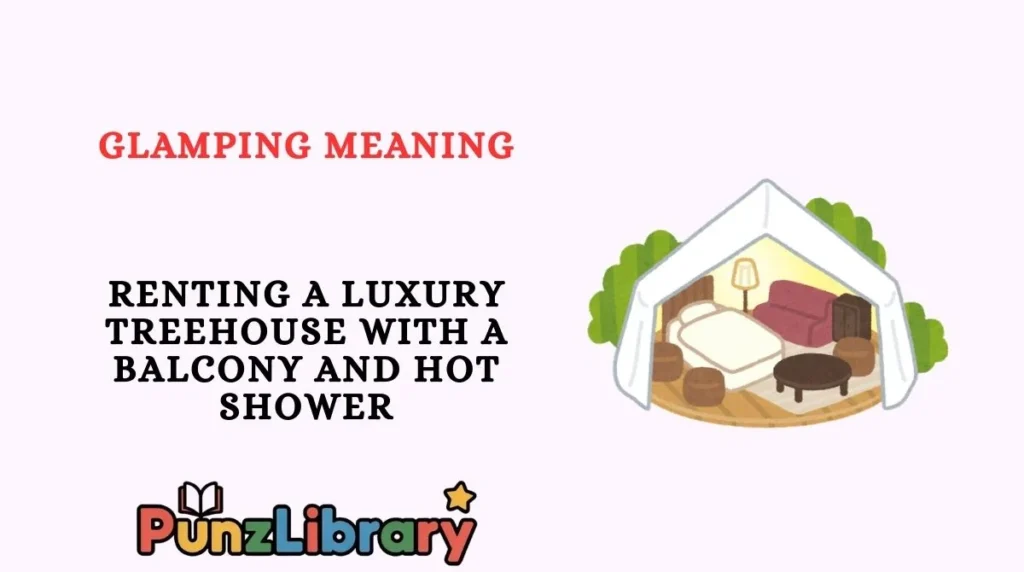
- Renting a luxury treehouse with a balcony and hot shower
You’re close to nature, but nature doesn’t inconvenience you.
Unlike traditional camping, glamping removes the struggle and keeps the magic.
Origin and Background of the Term
The word glamping is a blend of two words: “glamorous” and “camping.”
Although the term became popular in the early 2000s, the concept itself is much older.
Centuries ago, royalty and wealthy travelers stayed in lavish tents during long journeys. These tents came with rugs, furniture, servants, and even chandeliers. That was glamping — long before the word existed.
In the modern world, glamping grew as people started craving nature but weren’t willing to sacrifice comfort. Festivals, eco-resorts, and luxury retreats helped push the trend forward.
Social media played a big role too. Once people started seeing beautiful tents and domes on Instagram, glamping turned into a lifestyle experience, not just a travel option.
How Glamping Is Used in Daily Life
The glamping meaning shows up in everyday conversations more often than you think.
Here’s how people typically use it:
- Planning a vacation: “We’re not camping — we’re glamping.”
- Describing comfort: “It felt outdoorsy, but totally glamped up.”
- Choosing accommodations: “I want nature, but I also want a bed.”
- Social media captions: “Weekend glamping escape 🌿”
- Gift ideas: “I booked them a glamping weekend for their anniversary.”
Glamping has become shorthand for enjoying nature without suffering — and people love saying it because it instantly paints a picture.
Emotional or Practical Meaning of Glamping
Emotionally, glamping represents freedom without discomfort.
People are tired. Life is busy, digital, and noisy. Glamping offers an escape that feels relaxing, not exhausting.
Practically, it solves real problems:
- You don’t need camping skills
- You don’t buy expensive gear
- You don’t worry about safety or weather
Culturally, glamping reflects a shift in values. People now prioritize experiences over hardship. They want calm, beauty, and memories — not back pain.
For many, glamping also removes fear. Someone who’d never camp might happily glamp — and that opens the door to a deeper connection with nature.
Similar or Related Terms
Here are related terms you’ll often see alongside glamping:
- Luxury camping – Emphasizes comfort and high-end amenities
- Eco-lodging – Focuses more on sustainability than luxury
- Boutique stays – Small, stylish accommodations (not always outdoors)
- Resort camping – Organized outdoor stays with hotel-like services
- Adventure stays – Experiences focused more on activities than comfort
Each overlaps slightly, but glamping specifically balances nature and luxury.
Common Misunderstandings About Glamping
Let’s clear up some popular myths:
- “Glamping isn’t real camping.”
True — and that’s the point. - “It’s only for rich people.”
Not always. Many glamping sites are affordable. - “It ruins the outdoor experience.”
Actually, it often makes people appreciate nature more. - “You don’t do anything outdoors.”
Most glamping stays include hiking, fire pits, and stargazing. - “It’s just a trend.”
Glamping has stuck around because it meets modern needs.
Understanding these helps people choose the experience that’s right for them.
Examples of Glamping in Sentences
- “We went glamping in the mountains and slept in a heated dome.”
- “I love nature, but glamping makes it enjoyable.”
- “Their honeymoon involved beach glamping under the stars.”
- “Glamping was my first step into outdoor travel.”
- “This tent feels more like a hotel room.”
- “She booked a glamping site for a stress-free weekend.”
- “I never thought I’d enjoy camping until I tried glamping.”
- “That trip convinced me comfort and adventure can coexist.”
Why Understanding Glamping Meaning Matters Today
Travel is evolving. People want meaningful experiences, not just destinations.
Understanding the glamping meaning helps you:
- Choose better vacations
- Match expectations with reality
- Avoid travel stress
- Understand modern tourism trends
For businesses, content creators, and travelers alike, glamping represents how people want to live — more balanced, more mindful, and still comfortable.
It’s not about being lazy. It’s about being intentional.
And in a fast-paced world, that matters a lot.
Frequently Asked Questions
What does glamping mean in simple words?
Glamping means enjoying nature while staying comfortable, with real beds, bathrooms, and modern amenities.
Is glamping positive or negative?
It’s generally positive, especially for people who want outdoor experiences without discomfort.
Where is glamping commonly used?
Glamping is popular in tourism, travel blogs, eco-resorts, and vacation planning conversations.
Is glamping formal or informal?
The word is informal and conversational, commonly used in modern English.
Why do people search for glamping meaning?
People search it to understand travel options, plan vacations, or explore outdoor stays without traditional camping challenges.
With the passage of time, the term keeps gaining popularity.
Conclusion
The glamping meaning isn’t just about luxury tents or stylish cabins. It’s about choosing comfort without disconnecting from nature.
Glamping proves you don’t have to struggle to experience the outdoors. You can relax, recharge, and still feel adventurous — all at once.
As travel continues to evolve, glamping stands as a reminder that you deserve rest without guilt and beauty without discomfort.
Sometimes, the best adventures are the ones where you sleep well at night. 🌿