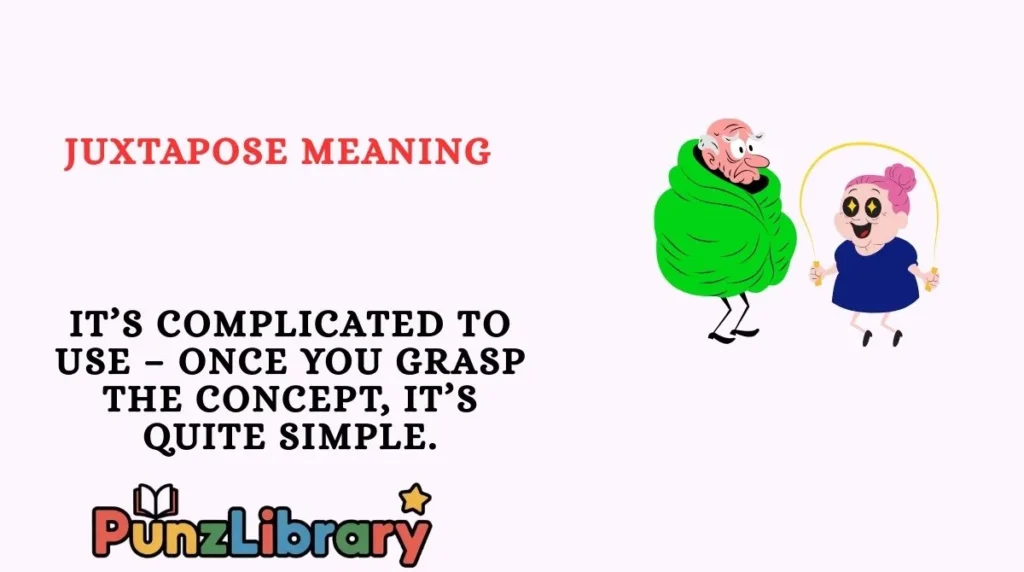
Have you ever noticed how contrasting ideas can make each other shine brighter? That’s essentially what the word “juxtapose” is all about .
From art to writing, marketing to daily conversations, the concept of juxtaposition—placing two things side by side to highlight their differences or similarities—is everywhere.
Understanding the juxtapose meaning isn’t just about memorizing a definition; it’s about seeing the world in a more thoughtful, insightful way.
By recognizing how things contrast, you can better appreciate stories, art, and even human behavior. This article will guide you through what “juxtapose” really means, its origins, practical uses, and why it matters today—all in a friendly, easy-to-understand style.
What Does Juxtapose Mean?
At its core, to juxtapose means to place two or more things side by side so you can see the differences or similarities more clearly. It’s like putting a black cat next to a white cat—you instantly notice how different they are.
It’s not limited to physical objects either. Writers often juxtapose ideas or emotions to create impact. For example:
- A story might juxtapose happiness and sorrow to make the sad moments more powerful.
- Advertisements often juxtapose a problem and a solution, showing how one clearly solves the other.
- In fashion, designers juxtapose bold colors with muted tones to make outfits stand out.
Essentially, juxtaposition is all about contrast and comparison, helping us notice details that might otherwise go unseen.
Origin and Background of the Term
The word “juxtapose” has an interesting history. It comes from the Latin roots “juxta”, meaning “next to,” and the French “poser”, meaning “to place.” So literally, it translates to “place next to.”
In the 17th and 18th centuries, writers and artists began using it more formally. Painters, for instance, would juxtapose light and shadow in their work to create dramatic effects. Poets and novelists used juxtaposition to highlight human emotions and social contrasts, like rich vs. poor or love vs. hate.
Even today, this centuries-old technique remains relevant in our digital world, from Instagram aesthetics to political cartoons. The art of placing things side by side to highlight differences is timeless.
How Juxtapose Is Used in Daily Life
You might not realize it, but we encounter juxtaposition every day. Here are a few practical examples:
- Home Decor – A rustic wooden table against a sleek modern chair creates an eye-catching contrast.
- Photography – Placing a tiny flower in front of a massive building shows scale and beauty.
- Writing – Authors juxtapose hope and despair in novels to make the plot more gripping.
- Marketing – A brand might juxtapose old vs. new products to highlight innovation.
- Fashion – Pairing sneakers with a formal outfit to make a bold statement.
- Food Presentation – Sweet and savory dishes served side by side for a sensory impact.
Everywhere you look, juxtaposition is quietly making life more interesting.
Emotional or Practical Meaning of Juxtapose
Juxtaposition is more than just a stylistic tool; it carries emotional weight. By contrasting ideas, objects, or emotions, we gain a deeper understanding of each element. For example:
- In movies, showing a moment of joy right after a tragedy heightens emotional impact.
- In social commentary, placing wealthy and impoverished communities side by side sparks awareness and empathy.
- In personal growth, comparing past mistakes with current progress can motivate change.
Understanding how to juxtapose isn’t just clever—it’s powerful, helping us see life in sharper, more meaningful contrasts.
Similar or Related Terms
Here are some words related to juxtapose, along with how they differ:
- Contrast – Highlights differences but doesn’t require side-by-side placement.
- Compare – Focuses on both similarities and differences; more analytical.
- Oppose – Implies conflict, whereas juxtapose is neutral observation.
- Collocate – Primarily used in linguistics, referring to words appearing together naturally.
- Place side by side – The literal meaning, less sophisticated but accurate.
Common Misunderstandings About Juxtapose
- It’s only for art or literature – False; you see it in daily life everywhere.
- It always shows opposites – Not necessarily; sometimes it highlights subtle similarities.
- It’s a negative word – Juxtaposition is neutral; it depends on context.
- It’s complicated to use – Once you grasp the concept, it’s quite simple.
- It’s formal English only – Can be used in casual speech or writing too.
By clearing up these myths, using “juxtapose” becomes natural and intuitive.
Examples of Juxtapose in Sentences
- The film cleverly juxtaposes humor with tragedy to create a memorable story.
- She liked to juxtapose bright colors with soft pastels in her paintings.
- The article juxtaposed old traditions with modern lifestyles to highlight change.
- In his speech, he juxtaposed personal experiences with national issues.
- The photographer juxtaposed the small child with the towering building for effect.
- Their design juxtaposes classic styles with futuristic touches beautifully.
- The writer juxtaposed happiness and grief in the final chapter.
Why Understanding Juxtapose Matters Today
In today’s world, where information comes at us from all directions, juxtaposition helps us make sense of complexity. Seeing contrasts side by side allows for better decision-making, clearer storytelling, and deeper emotional resonance.
- Education – Teachers juxtapose examples and counterexamples for clarity.
- Business – Companies juxtapose old vs. new strategies to show progress.
- Social Media – Influencers use juxtaposition to make content pop and engage audiences.
By understanding and using this concept, you not only improve your communication skills but also develop a keener sense of observation.
Frequently Asked Questions
What does juxtapose mean in simple words?
It means placing two things next to each other so you can notice differences or similarities clearly.
Is juxtapose positive or negative?
It’s neutral; it depends on context. It can show contrast, comparison, or even harmony.
Where is juxtapose commonly used?
In art, writing, photography, marketing, fashion, and everyday life. Anywhere contrasts are highlighted.
Is juxtapose formal or informal?
It’s flexible. Can be used in formal writing or casual conversation, depending on context.
Why do people search for juxtapose?
Many look it up to understand literature, art, or communication strategies, or to enhance their vocabulary.
Conclusion
Understanding the juxtapose meaning opens up a richer perspective on life. From everyday decisions to creative expression, knowing how to notice contrasts enhances your observation skills and storytelling abilities .
Next time you place two things side by side, think of the power of contrast—it can reveal beauty, truth, and insight in ways you might never have imagined. Remember, life’s most meaningful moments often shine brightest when contrasted with something else.