Have you ever noticed a magnolia tree and felt something calm, warm, and quietly powerful at the same time? Maybe it was outside a childhood home, in a garden you passed every day, or even mentioned in a poem or story.
Words like magnolia don’t just describe a flower — they carry emotion, history, and symbolism with them.
The magnolia meaning goes far beyond petals and branches. It represents beauty mixed with strength, gentleness paired with resilience.
That balance is exactly why people keep coming back to this word — whether for naming a baby, understanding cultural symbolism, or simply satisfying curiosity.
In today’s fast world, meanings matter more than ever. We don’t just want definitions; we want connection, depth, and relevance. Understanding what magnolia truly means helps us appreciate language, nature, and even ourselves a little more.
So let’s slow down for a moment and unpack the magnolia meaning — simply, honestly, and humanly 🌿
What Does Magnolia Meaning Mean?
At its core, the magnolia meaning refers to purity, dignity, strength, and beauty. But not the loud, flashy kind of beauty — it’s quiet, graceful, and confident.
Magnolia flowers bloom large and soft, yet they grow on some of the oldest and strongest trees on Earth. That contrast shapes the meaning.
Think of it this way:
- Someone with a gentle heart but unshakeable inner strength
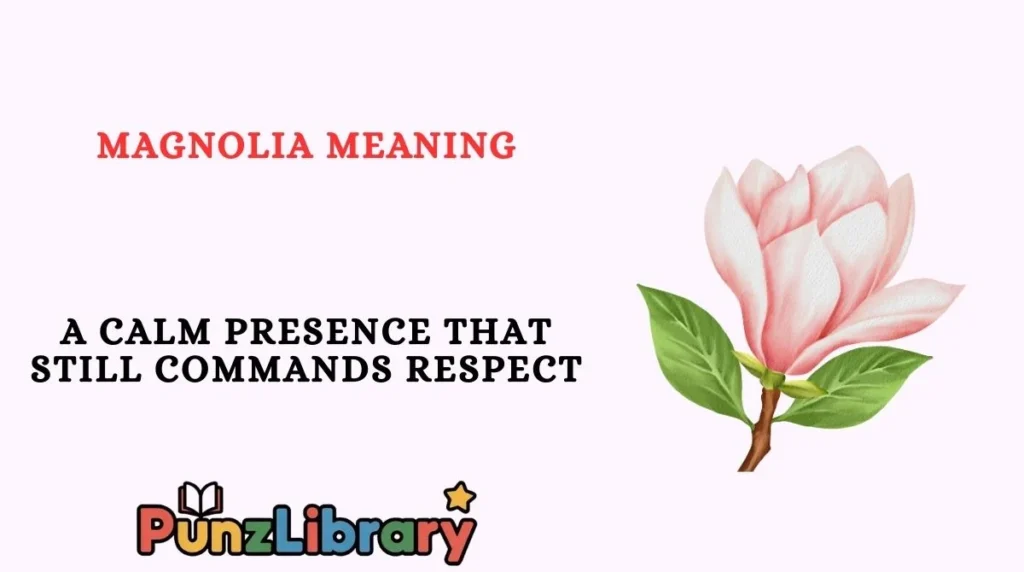
- A calm presence that still commands respect
- Beauty that doesn’t need approval
Real-life examples:
- A grandmother who’s kind, patient, and wise — that’s magnolia energy
- A peaceful home that feels safe and welcoming
- A person who doesn’t brag but naturally stands out
So, magnolia meaning is about balanced strength — soft on the surface, powerful underneath.
Origin and Background of the Term
The story behind the word magnolia is just as fascinating as its meaning.
The name comes from Pierre Magnol, a 17th-century French botanist who helped classify plants scientifically. In his honor, the magnolia tree was named Magnolia — and that name stuck across centuries and continents.
But here’s what makes it special:
Magnolias existed before bees. They evolved millions of years ago and were pollinated by beetles. That alone gives them a sense of ancient strength and endurance.
In different cultures:
- China associated magnolias with purity and nobility
- Southern United States saw them as symbols of hospitality and grace
- Victorian flower language tied magnolias to dignity and perseverance
So when people talk about magnolia meaning today, they’re unknowingly referencing a symbol shaped by history, science, and culture combined.
How Magnolia Is Used in Daily Life
You might be surprised how often the word magnolia appears in everyday life. It’s not limited to gardens.
Here are some practical uses:
- Names: Magnolia is used as a baby name, symbolizing grace and strength
- Home decor: “Magnolia white” often represents warmth and elegance
- Literature & poetry: Used to convey emotional depth and beauty
- Branding: Businesses use it to appear calm, trustworthy, and refined
- Places: Streets, towns, and neighborhoods carry the name
- Music & movies: Often linked to nostalgia and heartfelt emotion
The word feels soft, trustworthy, and timeless — which is why people keep choosing it.
Emotional and Practical Meaning of Magnolia
Emotionally, the magnolia meaning resonates deeply with modern life.
Today, people admire:
- Quiet confidence
- Emotional strength
- Grace under pressure
That’s exactly what magnolia represents.
In a world obsessed with speed, noise, and attention, magnolia reminds us that:
- You don’t have to shout to be heard
- You don’t need approval to have value
- Strength can be calm and kind
Practically speaking, the word is often used to describe:
- A peaceful mindset
- A warm, welcoming space
- Emotional resilience
Magnolia isn’t about perfection — it’s about enduring beauty.
Similar or Related Terms
Here are some words often connected to magnolia, with clear differences:
- Lotus – Symbolizes spiritual awakening and rebirth
- Rose – Represents love and passion
- Lily – Associated with purity and innocence
- Jasmine – Linked with romance and sensuality
- Camellia – Represents admiration and perfection
Unlike these, magnolia blends softness and strength, not focusing on just one trait.
Common Misunderstandings About Magnolia Meaning
Let’s clear a few things up.
- It only means beauty
❌ No — it also represents strength and resilience - It’s just a flower name
❌ It’s a cultural and emotional symbol - It’s old-fashioned
❌ Magnolia is timeless, not outdated - It’s only feminine
❌ The meaning applies to everyone - It has no modern relevance
❌ Its symbolism fits today’s emotional needs perfectly
Understanding magnolia properly gives it real depth.
Examples of Magnolia in Sentences
Here are natural, everyday examples:
- Her calm strength reminded me of a magnolia in bloom.
- The house felt warm and welcoming, like a magnolia-filled porch.
- Magnolia trees lined the street, giving it quiet elegance.
- She carried herself with magnolia-like grace.
- The scent of magnolia brought back childhood memories.
- His leadership style was gentle, yet firm — truly magnolia-like.
- The painting captured the spirit of magnolia strength.
Why Understanding Magnolia Meaning Matters Today
Words shape how we see ourselves and the world.
In stressful times, people seek meanings that:
- Offer calm
- Encourage resilience
- Validate gentle strength
The magnolia meaning fits perfectly into modern conversations about:
- Emotional intelligence
- Mental strength
- Graceful living
Whether you’re choosing a name, writing poetry, branding a business, or just expanding your vocabulary — understanding magnolia gives you a richer emotional toolkit.
It reminds us that softness isn’t weakness, and strength doesn’t always roar.
Frequently Asked Questions
What does magnolia mean in simple words?
Magnolia means beauty, strength, dignity, and calm confidence combined.
Is magnolia positive or negative?
It’s strongly positive, symbolizing grace and resilience.
Where is magnolia commonly used?
In names, nature, literature, home decor, branding, and cultural symbolism.
Is magnolia formal or informal?
It works in both — poetic yet everyday friendly.
Why do people search for magnolia meaning?
Because it carries emotional depth, symbolism, and personal relevance that evolves with the passage of time.
Conclusion
The magnolia meaning isn’t loud or dramatic — and that’s exactly why it’s powerful.
It teaches us that:
- Strength can be gentle
- Beauty can be resilient
- Calm can be commanding
In a noisy world, magnolia stands tall without shouting. And maybe that’s the reminder we all need — you don’t have to be loud to matter 🌸
Let magnolia inspire you to grow softly, stand firmly, and bloom in your own time.