Have you ever wondered what makes a promise truly binding? Or why some words carry so much weight that breaking them feels almost unthinkable?
That’s where an oath comes in. We hear it all the time—in courts, ceremonies, and even casual promises—but the true essence of an oath goes far beyond mere words.
At its core, an oath is a solemn promise or pledge, often made publicly, that binds a person morally, socially, or legally to a commitment. But what makes it fascinating is how it combines personal integrity, cultural significance, and historical weight.
Whether you’re taking a professional oath like doctors do or just promising to keep a friend’s secret, understanding its meaning can change the way you see commitments in your life.
In this article, we’ll dive deep into the meaning, origin, and usage of the term “oath”, exploring how it shapes our behavior, strengthens trust, and carries emotional significance. By the end, you’ll see why this simple word is so much more than just a formal statement.
What Does Oath Mean?
In simple, everyday words, an oath is a promise made with a deep sense of honesty and responsibility. Unlike casual promises, an oath is often seen as binding—breaking it can have moral, social, or even legal consequences.
Think of it like this: when you say “I swear on my life,” you’re not just talking—you’re making a commitment that carries weight.
Here are a few real-life examples:
- Courtroom oath: Witnesses swear to tell “the truth, the whole truth, and nothing but the truth.”
- Professional oath: Doctors take the Hippocratic Oath, promising to do no harm to patients.
- Personal vow: You might swear to your best friend that you’ll keep a secret forever.
In each case, the oath transforms ordinary words into a serious commitment, showing honesty and trustworthiness.
Origin and Background of the Term
The word “oath” has a fascinating history. It comes from the Old English word “āð”, which meant a solemn vow or promise. In ancient times, people would often swear by gods, sacred objects, or even nature to show that their word was trustworthy.
For instance, in medieval Europe, knights swore oaths of loyalty to their lords, binding themselves to honor and duty. In many cultures, breaking an oath wasn’t just socially unacceptable—it was considered a serious offense against both community and divine law.
This long-standing tradition shows that the concept of an oath is deeply rooted in human culture, emphasizing honesty, integrity, and accountability.
How Oath Is Used in Daily Life
You might think oaths are only for formal settings, but they actually show up in everyday life in subtle ways:
- School pledges: Students often recite oaths to promote honesty and respect.
- Marriage vows: Couples swear to support and love each other, reflecting a personal oath.
- Public office: Politicians swear oaths to serve the public faithfully.
- Friendship promises: Swearing to keep a secret or help a friend is a casual oath.
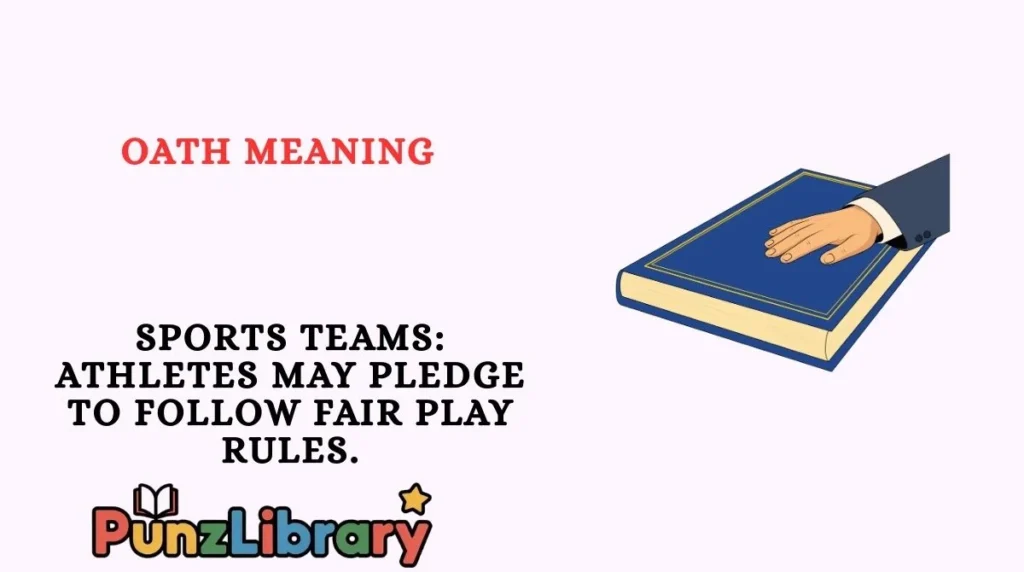
- Sports teams: Athletes may pledge to follow fair play rules.
- Self-promises: You can even make an oath to yourself to reach a goal or adopt a habit.
In each case, the oath strengthens accountability, making the commitment feel more real and respected.
Emotional or Practical Meaning of Oath
An oath is powerful not just legally but emotionally. It shows that a person values honesty and trustworthiness.
- Cultural significance: In many societies, taking an oath is a rite of passage, marking a serious life commitment.
- Social impact: Oaths build trust within communities, families, and professional circles.
- Personal motivation: Making an oath often encourages people to follow through on their promises, knowing that breaking it could harm relationships or reputation.
When someone swears an oath, it’s a public declaration of responsibility, which carries deep psychological and social meaning.
Similar or Related Terms
Here are some terms related to an oath and how they differ:
- Pledge: A promise, usually formal but not always as binding as an oath.
- Vow: Often spiritual or personal, usually linked to life commitments like marriage.
- Affirmation: A formal declaration, often used instead of an oath in courts for those with religious objections.
- Promise: General commitment; less formal and less weighty than an oath.
- Covenant: Formal agreement, often legal or religious, usually between groups or parties.
Common Misunderstandings About Oath
- Oath is only for courts or ceremonies – False. Oaths exist in everyday life too.
- Oaths are always religious – Not true; secular oaths are common.
- Breaking an oath has no consequences – Social and personal consequences can be severe.
- Only adults take oaths – Children often make pledges or school oaths.
- Oaths are meaningless words – On the contrary, they carry emotional, moral, and sometimes legal weight.
- Oaths are outdated – They remain relevant in professional, legal, and personal settings today.
Examples of Oath in Sentences
- She took an oath of honesty before testifying in court.
- Doctors swear an oath to protect life.
- They exchanged friendship oaths to stay loyal.
- Politicians often take an oath to serve the public.
- The knight pledged his oath of loyalty to the king.
- Students recited a school oath promoting integrity.
- He made an oath to himself to run a marathon this year.
- Marriage vows are a beautiful oath of love and commitment.
Why Understanding Oath Matters Today
In modern life, where trust and accountability are sometimes scarce, understanding the meaning of an oath is more important than ever.
- Professional relevance: Helps understand legal, medical, or governmental responsibilities.
- Social value: Promotes honesty, trust, and integrity in personal relationships.
- Personal growth: Encourages self-discipline and motivation when making promises to oneself.
Recognizing the significance of an oath can make you a more trustworthy friend, professional, and citizen. It’s about honoring words and actions, which remains timeless.
Frequently Asked Questions
What does oath mean in simple words?
An oath is a serious promise, usually made publicly, showing honesty and responsibility.
Is oath positive or negative?
Oaths are generally positive—they reflect commitment, integrity, and trustworthiness.
Where is oath commonly used?
Courts, professional ceremonies, marriages, public office, schools, and personal commitments.
Is oath formal or informal?
It can be both: formal in courts and professions, informal in friendships or personal promises.
Why do people search for oath?
People often want to understand its meaning, history, usage, and cultural or emotional significance.
Conclusion
An oath is more than just words—it’s a declaration of trust, responsibility, and integrity. From courts to classrooms, marriages to friendships, oaths remind us of the importance of keeping our promises.
The next time you make a pledge, remember: it carries weight, shapes relationships, and even motivates your personal growth. Your words can become your strongest bond. Honor them.