Have you ever wondered what it truly means to live off the grid? Maybe you’ve seen people in documentaries surviving in the wilderness, or perhaps a friend mentioned going “off the grid” for a week without Wi-Fi and cell service.
But the truth is, off the grid meaning goes far beyond just escaping technology—it’s about independence, self-reliance, and sometimes, a deeper connection to life itself.
In today’s fast-paced world, understanding this concept can inspire us to rethink how we live, how we use resources, and even how we manage stress
. Whether you’re curious about off-grid living, prepping for emergencies, or just want to unplug occasionally, knowing the meaning behind this phrase is more relevant than ever.
Let’s dive into the term, explore its origins, real-life examples, and why it has captured the imagination of people across the globe.
What Does “Off the Grid” Mean?
At its core, going off the grid refers to living independently from public utilities, like electricity, water supply, or the internet. But it’s not just about infrastructure—it’s also a mindset. Being off the grid can mean choosing a simpler lifestyle, reducing reliance on modern systems, or seeking solitude and freedom.
Real-life examples include:
- A family living in a cabin powered entirely by solar panels, with water from a nearby stream.
- Someone taking a month-long retreat in nature with no phone or internet access.
- Communities creating self-sustaining villages with their own gardens, energy, and waste systems.
The essence is self-sufficiency, whether temporary or permanent.
Origin and Background of the Term
The phrase “off the grid” has its roots in the early 20th century when electricity grids started expanding across cities. To be “on the grid” meant being connected to public utilities. Those who chose to live without such connections were literally “off the grid.”
Over time, the term evolved. In the 1970s, with the rise of environmental movements and back-to-the-land philosophies, “off the grid” started to symbolize freedom from societal dependence. People sought simplicity, sustainability, and a more authentic connection to life, rather than just escaping modern conveniences.
Today, the term is widely used in popular culture, technology, and even financial independence discussions, expanding its meaning beyond just electricity and water.
How “Off the Grid” Is Used in Daily Life
Even if you don’t live in a remote cabin, “off the grid” can show up in your daily life:
- Digital Detox: Turning off your phone, social media, and email for a weekend.
- Sustainable Living: Growing your own vegetables or using solar power at home.
- Travel Adventures: Camping in remote areas without Wi-Fi or electricity.
- Financial Independence: Managing your life without relying on credit or bank systems.
- Mental Health Breaks: Taking a day or week “offline” to recharge.
These examples show that going off the grid isn’t only physical—it can be mental, emotional, or digital too.
Emotional or Practical Meaning of “Off the Grid”
The phrase carries more than practical implications—it taps into deep emotional and cultural significance. Living off the grid can:
- Give a sense of freedom and control over your life.
- Encourage creativity and problem-solving, as you rely on limited resources.
- Reduce stress by disconnecting from constant digital noise.
- Foster a closer connection to nature and community.
In a world that often glorifies busyness, being off the grid reminds us that simplicity can be empowering, not limiting.
Similar or Related Terms
- Self-sufficient: Managing your own needs without relying on outside systems.
- Off-the-network: Usually refers to digital or communication systems rather than utilities.
- Back-to-nature: Emphasizes returning to natural living environments.
- Remote living: Living in isolated areas, often connected to survival skills.
- Sustainable lifestyle: Using resources responsibly to maintain long-term balance.
Each of these shares a connection with off-grid living but differs in focus—some emphasize technology, others nature, and some financial or practical independence.
Common Misunderstandings About “Off the Grid”
- It means total isolation: Not always. Many off-gridders interact with nearby communities.
- Only about electricity: It can include water, internet, or financial independence.
- It’s always expensive: DIY solutions and minimalist living can make it affordable.
- It’s just for survivalists: Anyone seeking freedom, digital detox, or sustainability can adopt off-grid principles.
By clarifying these, it becomes clear that off-grid living is versatile and accessible.
Examples of “Off the Grid” in Sentences
- We spent a week off the grid, camping without phones or electricity.
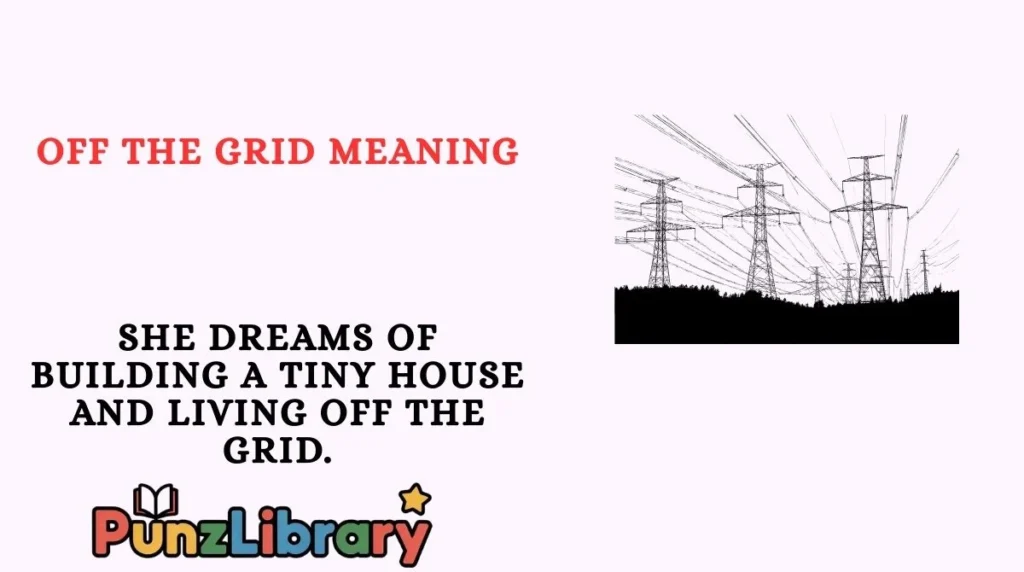
- She dreams of building a tiny house and living off the grid.
- Even during city life, I try to go off the grid on weekends.
- The community is fully off the grid, relying on solar energy and rainwater.
- He enjoys being off the grid, away from social media pressures.
- Our cabin is completely off the grid, with no internet or public utilities.
These sentences show how naturally the phrase fits in everyday conversation.
Why Understanding “Off the Grid” Matters Today
In a world dominated by technology, urbanization, and fast-paced lifestyles, understanding the concept of going off the grid is more than curiosity—it’s a tool for empowerment. It teaches:
- Resourcefulness: How to use energy, water, and food efficiently.
- Mindfulness: How to disconnect and focus on what truly matters.
- Sustainability: How individual choices impact the environment.
Whether for personal growth, emergency preparedness, or lifestyle experimentation, knowing the off the grid meaning helps us live smarter, calmer, and more intentional lives.
Frequently Asked Questions
What does “off the grid” mean in simple words?
It means living or acting independently from public utilities, technology, or modern systems—basically relying on yourself.
Is “off the grid” positive or negative?
It’s usually positive, symbolizing freedom, independence, and simplicity, though it can feel challenging for some.
Where is “off the grid” commonly used?
It’s used in lifestyle discussions, survival guides, environmental contexts, travel blogs, and personal development advice.
Is “off the grid” formal or informal?
It’s informal and conversational but widely understood in journalism and lifestyle writing.
Why do people search for “off the grid”?
People are curious about sustainable living, digital detox, financial independence, or adventure travel.
Conclusion
Understanding off the grid meaning isn’t just about unplugging from society—it’s about choosing freedom, simplicity, and self-reliance in a way that suits your life.
Whether you want to escape technology for a weekend or build a sustainable lifestyle, this concept reminds us that true independence starts with small, intentional choices.
So, next time life feels overwhelming, consider going a little off the grid—it might just reconnect you to the most important parts of yourself.