Ever bought insurance and wondered, “Wait, what exactly does it mean to be a policyholder?” You’re not alone. Many people sign up for insurance, thinking they know the terms, but policy holder meaning often gets misunderstood.
put, a policyholder is the person or entity that owns an insurance policy. That might sound simple, but the role carries responsibilities, rights, and sometimes even a little confusion.
Understanding what a policyholder is matters because it affects how claims are made, who gets benefits, and how insurance is managed. Whether it’s car insurance, health coverage, or life insurance, knowing your position can save headaches later.
Imagine buying life insurance for a loved one—being clear on your rights as a policyholder ensures that your family receives the protection you intended.
In this article, we’ll break down the meaning of a policyholder, explore its origins, share practical examples, clarify misconceptions, and explain why it matters more than ever in today’s world. By the end, you’ll not only understand the term but also feel empowered about your insurance journey.
What Does Policy Holder Mean?
At its core, a policyholder is the official owner of an insurance policy. This is the person who pays premiums, has the authority to make changes, and receives the benefits of the policy. Think of it as having a VIP pass—you hold the ticket, and you control how it’s used.
Here are a few real-life examples:
- Car Insurance: If you buy car insurance for your vehicle, you are the policyholder. You can decide the coverage, add drivers, or file claims.
- Health Insurance: A parent buying health insurance for their family is the policyholder. They control the policy, but their children are the beneficiaries.
- Life Insurance: If you take out a life insurance policy for yourself, you’re the policyholder, and you name who receives the payout after your death.
In short, being a policyholder means you own the policy, make decisions, and bear the responsibility of keeping it active.
Origin and Background of the Term
The term “policyholder” comes from the combination of two words: policy and holder.
- Policy: Historically, a policy referred to a written document outlining terms, rules, or promises. Its roots trace back to the Latin word politia, meaning “civil administration” or “public order.” Over time, the word evolved to mean a contract or agreement, particularly in insurance.
- Holder: Simply put, this is someone who possesses or owns something.
So, policyholder literally means “the one who holds the policy.”
Storytelling often helps here: In 17th-century England, merchants and ship owners would take out policies to protect their ships from pirates or storms. The person who bought the insurance was called the policyholder—they had the right to claim money if disaster struck. That tradition continues today in modern insurance, from homes to health coverage.
How Policy Holder Is Used in Daily Life
You interact with the concept of being a policyholder more than you think. Here’s how:
- Buying Insurance: Every time you purchase a car, health, or life insurance plan, you automatically become the policyholder.
- Paying Premiums: The policyholder is responsible for keeping payments up-to-date. Missed payments can cancel coverage.
- Making Claims: Only the policyholder (or authorized beneficiaries) can file claims to receive benefits.
- Changing Coverage: Adding family members, increasing coverage, or changing payment plans—all these decisions fall to the policyholder.
- Receiving Notices: Insurance companies send important updates, like policy renewals, to the policyholder.
- Naming Beneficiaries: Especially in life insurance, the policyholder decides who gets the payout.
In everyday life, being a policyholder means taking charge of your insurance decisions and ensuring protection for yourself or loved ones.
Emotional or Practical Meaning of Policy Holder
Being a policyholder isn’t just a technical term—it carries emotional and social weight.
- Security: Knowing you have coverage gives peace of mind. Imagine a health emergency: the policyholder ensures care can be accessed without financial panic.
- Responsibility: Owning a policy is a commitment to yourself or others, like safeguarding your family’s future.
- Empowerment: Policyholders have control. You decide what coverage is enough and how it’s used.
In modern culture, being a policyholder is also a marker of responsibility. It shows planning for uncertainty and taking proactive steps to protect what matters most.
Similar or Related Terms
- Beneficiary: The person who receives the insurance payout. Not the policyholder unless specified.
- Insured: The person covered by the policy. Sometimes, the policyholder and insured are the same, sometimes different.
- Premium Payer: The individual paying for the insurance. Usually, it’s the policyholder.
- Underwriter: The professional who evaluates and approves the policy. Not the same as policyholder.
Common Misunderstandings About Policy Holder
- Policyholder vs. Insured: People think they’re always the same. Not true—your child can be insured under your policy.
- Beneficiary = Policyholder: The person who gets the payout may not have bought the policy.
- Policyholders don’t pay premiums: They usually do—this is their main responsibility.
- Policyholders can’t make changes: They can, often including coverage upgrades, name changes, or adding dependents.
- It’s only for life insurance: Every type of insurance has policyholders.
- Policyholder rights are unlimited: Some rights are restricted by the insurer’s terms.
Examples of Policy Holder in Sentences
- As the policyholder, Maria could choose her health insurance network.
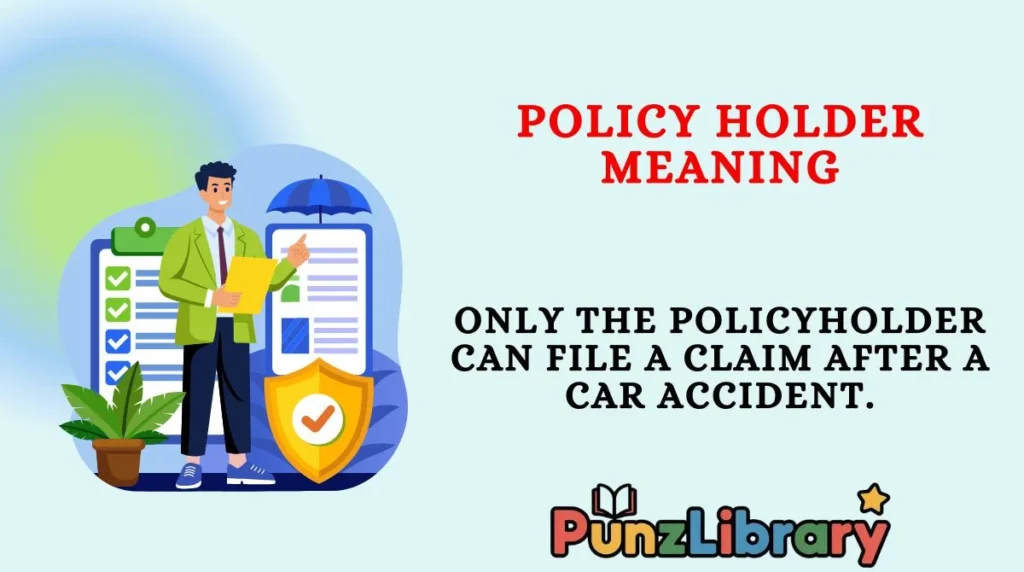
- Only the policyholder can file a claim after a car accident.
- The insurance company sent a renewal notice to the policyholder last week.
- Being a policyholder comes with both responsibilities and rights.
- The policyholder decided to increase life insurance coverage for extra security.
- Even though the children were insured, the mother was the policyholder.
- The bank required the policyholder to list them as a lienholder for the home insurance.
- As a policyholder, you can update your beneficiaries anytime.
Why Understanding Policy Holder Matters Today
In today’s fast-paced world, insurance is more than a safety net—it’s a lifeline. Knowing the policy holder meaning ensures you’re not caught off guard during emergencies.
- Financial Literacy: Understanding your role helps manage money wisely.
- Legal Clarity: Protects you in disputes over claims or payouts.
- Peace of Mind: Reduces stress in uncertain situations.
Whether it’s protecting your family, your car, or your health, understanding what it means to be a policyholder allows you to make informed decisions and take control of your future.
Frequently Asked Questions
What does policy holder mean in simple words?
A policyholder is the person or entity who owns an insurance policy, pays premiums, and can make decisions about the coverage.
Is policy holder positive or negative?
It’s neutral but comes with responsibility and authority, making it generally positive in terms of control and security.
Where is policy holder commonly used?
Mostly in insurance contexts: life, health, car, home, and business insurance.
Is policy holder formal or informal?
It’s a formal term, commonly used in contracts, legal documents, and insurance policies.
Why do people search for policy holder?
People want to understand their rights, responsibilities, and coverage under an insurance policy, especially when buying or claiming.
Conclusion
Being a policyholder might seem like just a label, but it’s much more—it’s a position of responsibility, control, and protection.
From making crucial decisions to safeguarding your loved ones, understanding your role ensures peace of mind and financial security. Remember, being informed is empowering. Take charge of your policies today, and secure a safer tomorrow.