
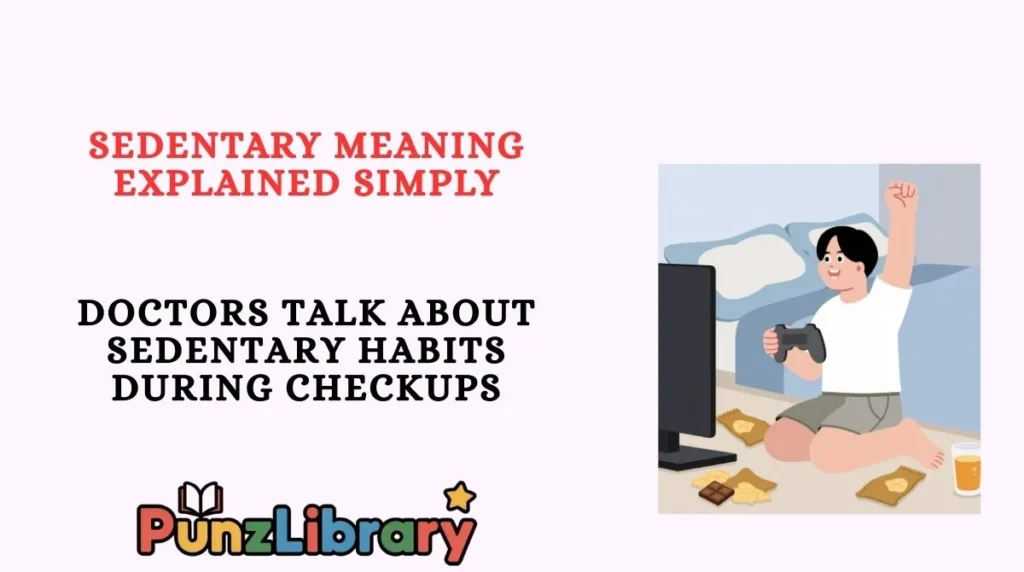
Sounds familiar? That routine is exactly why people keep searching for the sedentary meaning—because it quietly describes how many of us live today.
At its core, sedentary doesn’t sound dramatic. It’s a calm, almost harmless word. But behind it sits a powerful reality about our habits, health, and mindset. In simple terms, sedentary behavior is about how much we sit and how little we move. And in a screen-driven world, that matters more than ever.
Understanding this word isn’t just about vocabulary. It’s about awareness. When you truly grasp what sedentary means, you start noticing it everywhere—in your job, your routine, even your mood. And that awareness is often the first step toward positive change.
What Does Sedentary Mean?
In everyday language, sedentary describes a lifestyle or activity that involves very little physical movement. It usually means spending long periods sitting, reclining, or lying down while awake.
This doesn’t mean someone is lazy or unmotivated. That’s a common assumption—but it’s not accurate. A person can be incredibly productive and still live a sedentary life.
Simple real-life examples:
- Someone working eight hours at a desk with minimal breaks
- A student attending online classes all day, seated in front of a laptop
- An evening routine filled with TV, gaming, or phone scrolling
In all these cases, movement is limited. That’s what makes them sedentary, not the person’s character or ambition.
Origin and Background of the Term
The word sedentary comes from the Latin word “sedentarius,” which itself comes from sedere, meaning “to sit.”
Originally, the term wasn’t negative at all. It was used to describe scholars, writers, judges, and thinkers—people whose work required sitting and deep focus. In ancient times, being sedentary often meant you were educated or respected.
Fast-forward to today, and the meaning has evolved. Society now understands that too much sitting comes with consequences, especially when combined with modern technology. What was once a sign of intellect has become a signal for imbalance.
That shift in meaning mirrors how life itself has changed—from physically demanding survival to comfort-based convenience.
How Sedentary Is Used in Daily Life
You’ll hear or see sedentary used in many everyday situations, especially in health, work, and lifestyle conversations.
Here are some common ways it appears:
- Doctors talk about sedentary habits during checkups
- Fitness apps warn users about sedentary hours
- Jobs are labeled as sedentary roles
- News articles mention the sedentary nature of remote work
- Schools discuss sedentary screen time for children
It’s a neutral word with informative intent. It doesn’t judge—it explains.
Emotional or Practical Meaning of Sedentary
Beyond definition, sedentary carries emotional and practical weight.
On a practical level, it highlights how your body is being used—or ignored. Muscles crave movement. Joints need motion. Energy flows better when we don’t stay still too long.
Emotionally, a sedentary lifestyle can subtly affect mood. Many people report feeling sluggish, unmotivated, or mentally foggy after long hours of inactivity. It’s not weakness—it’s biology.
Culturally, the rise of sedentary behavior reflects modern success. We’ve designed lives that minimize effort. Convenience is king. But understanding the sedentary meaning helps us question whether comfort has quietly replaced balance.
Similar or Related Terms
Here are words often confused with sedentary, along with clear differences:
- Inactive – Not moving much, but not necessarily sitting
- Passive – Mentally or emotionally disengaged, not physical
- Stationary – Not moving at all, often temporary
- Idle – Not working or being productive
- Couch-bound – Informal term, often exaggerated
Sedentary specifically focuses on low movement over time, not motivation or attitude.
Common Misunderstandings About Sedentary
Let’s clear up a few myths people often believe:
- Sedentary means lazy
→ Not true. Many hardworking professionals live sedentary lives. - Only unhealthy people are sedentary
→ Even athletes can have sedentary jobs. - Exercise cancels out sedentary behavior
→ Exercise helps, but long sitting still matters. - Sedentary only applies to adults
→ Children and teens can also be sedentary. - Sitting is bad, always
→ Sitting itself isn’t the issue—too much of it is.
Understanding these distinctions builds true awareness, not guilt.
Examples of Sedentary in Sentences
Here are natural, everyday uses of the word:
- My job is mostly sedentary, so I try to walk in the evenings.
- The doctor advised reducing sedentary time during the workday.
- After months of remote work, she noticed her lifestyle had become sedentary.
- Sedentary habits can develop slowly without us realizing it.
- Even creative jobs can be surprisingly sedentary.
- He didn’t feel tired—just drained from being sedentary all day.
- Modern technology encourages a more sedentary routine.
Why Understanding Sedentary Matters Today
Today’s world rewards stillness. Screens, automation, and digital convenience have made life easier—but also less active.
Knowing the sedentary meaning helps you:
- Recognize hidden patterns in your routine
- Make small, realistic changes
- Understand health advice without fear
- Talk about lifestyle choices confidently
This knowledge isn’t about panic or perfection. It’s about informed balance. When you understand the word, you regain control over how it shows up in your life.
Frequently Asked Questions
What does sedentary mean in simple words?
It means spending a lot of time sitting or moving very little during the day.
Is sedentary positive or negative?
It’s neutral by definition, but often discussed negatively due to health effects.
Where is sedentary commonly used?
It’s used in health, fitness, work, education, and lifestyle discussions.
Is sedentary formal or informal?
It’s a formal but commonly used word in everyday conversation.
Why do people search for sedentary meaning?
People want clarity about health advice, work labels, or lifestyle concerns as awareness increases with time.
Conclusion
The word sedentary may seem small, but its meaning reaches into how we live, work, and feel. Understanding it doesn’t demand guilt—it invites awareness. Once you see where sedentary habits exist, you gain the power to reshape them, one small movement at a time.
You don’t need to change your whole life. You just need to notice it. And sometimes, noticing is where real growth begins.