Have you ever found yourself pausing mid-sentence, repeating sounds, or struggling to get words out smoothly? If yes, then you’ve experienced what is commonly known as a stammer.
But what exactly does “stammer” mean, and why is it important to understand it beyond just its dictionary definition? Whether you’re curious for personal knowledge, helping a loved one, or studying human communication, knowing about stammering gives you deeper insight into speech patterns, confidence, and emotional well-being.
In simple terms, a stammer refers to a speech condition where a person repeats sounds, syllables, or words, or experiences noticeable pauses while speaking.
It’s more than just “nervous talking”—it’s a real phenomenon that affects millions of people worldwide. Understanding it isn’t only about words—it’s about empathy, communication, and supporting those who face this challenge every day.
Let’s explore this concept from its origins, everyday usage, emotional significance, and practical insights to help you truly grasp what stammering is all about.
What Does Stammer Mean?
At its core, stammering is when someone has difficulty speaking smoothly. It can involve:
- Repeating the first sound of a word (“I-I-I want to go…”)
- Prolonging sounds (“Ssssssometimes…”)
- Pausing unusually in the middle of a sentence
For example:
- A child in class may stammer when reading aloud, pausing frequently before finishing words.
- A nervous adult during a presentation might stammer when introducing themselves.
- Someone telling a story might repeat a word or syllable while excited or anxious.
Notice that stammering isn’t a reflection of intelligence. Many highly successful people, including famous actors, leaders, and public speakers, have dealt with stammering at some point in their lives.
Origin and Background of the Term
The word “stammer” has roots in Old English—“stammeren” meant to stutter or falter in speech. Over centuries, the term evolved across languages, keeping its core meaning of speech hesitation or repetition.
Historically, stammering was often misunderstood. Ancient cultures sometimes linked it to nerves, fear, or even moral weakness. Thankfully, today we understand that stammering is mostly neurological or developmental, often influenced by genetics, environment, and emotional factors.
Fun fact: Famous historical figures like King George VI of the United Kingdom had severe stammers, yet with therapy and determination, they delivered powerful speeches that inspired millions. This reminds us that a stammer does not limit potential—it’s just one part of human communication.
How Stammer Is Used in Daily Life
Stammering doesn’t only appear in therapy sessions or medical discussions. It’s part of everyday life, often in subtle ways. Here are practical examples:
- At school: A student stammers while reading a poem aloud.
- In a job interview: Nervous candidates might stammer on certain words.
- During storytelling: Someone pauses or repeats words when excited.
- Social conversations: Stammering may occur when meeting new people or speaking on the phone.
- Public speaking: Even experienced speakers may stammer before key points.
The key takeaway? Stammering is natural and situational, and it often appears when emotions, pressure, or nerves are involved.
Emotional or Practical Meaning of Stammer
Understanding stammering goes beyond speech. Emotionally, it reflects vulnerability, courage, and human imperfection. People who stammer often develop resilience because they must navigate communication challenges daily.
From a practical perspective, awareness encourages patience and support. When we understand what stammering is, we foster inclusive environments—whether at school, workplace, or family gatherings. Modern society benefits from recognizing that speech fluency isn’t the measure of intellect or capability.
Similar or Related Terms
Here are words often linked to stammering:
- Stutter: Often used interchangeably, but some prefer “stammer” in British English.
- Speech disfluency: A broader term for any interruption in normal speech.
- Hesitation: Temporary pauses in speaking; not always a stammer.
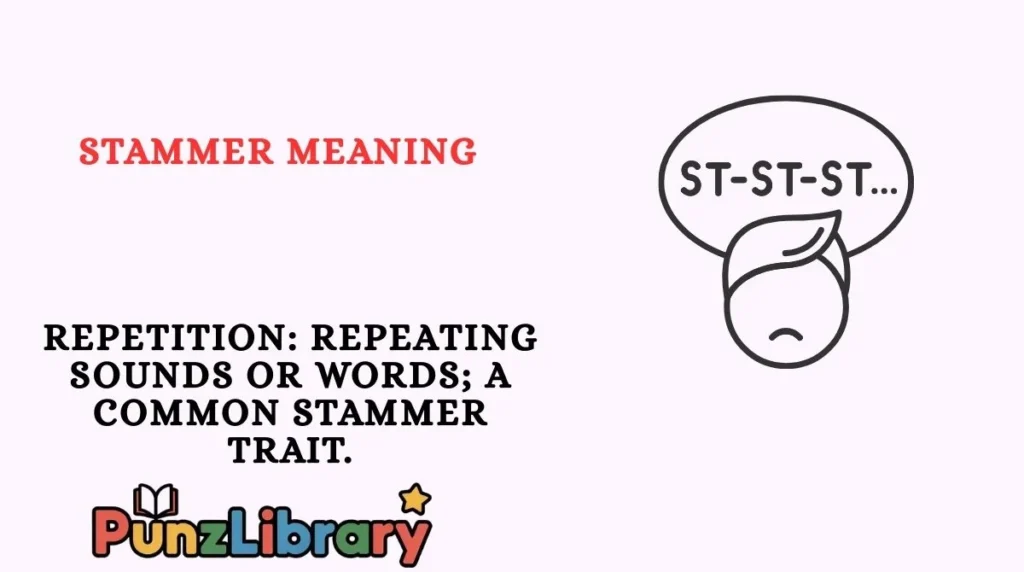
- Repetition: Repeating sounds or words; a common stammer trait.
- Fluency disorder: Clinical term encompassing stammering and stuttering.
Common Misunderstandings About Stammer
Many misconceptions surround stammering:
- It’s caused by nervousness only: False. Nerves may worsen it, but stammering can exist independently.
- People who stammer lack intelligence: Absolutely untrue. Intelligence and speech fluency are unrelated.
- Therapy can “cure” it completely: Some improvement is possible, but stammering may persist.
- It’s a sign of weakness: On the contrary, speaking despite stammering shows courage.
- Only children stammer: Adults can stammer too; it may continue lifelong.
Examples of Stammer in Sentences
- Sarah tends to stammer when she’s nervous about presentations.
- The little boy stammered through his first lines in the school play.
- I sometimes stammer on unfamiliar words during phone calls.
- He didn’t let his stammer stop him from sharing his story.
- Emma’s friends waited patiently as she stammered a few words.
- The actor’s speech coach helped him manage his stammer.
- Even adults can stammer when they’re anxious or excited.
- Public speaking often makes people stammer, and that’s normal.
Why Understanding Stammer Matters Today
In today’s fast-paced world, communication is key. Misunderstanding stammering can lead to unfair judgments, missed opportunities, or social exclusion. Understanding it helps:
- Educators support students without judgment
- Employers foster inclusive workplaces
- Friends and family show empathy
- Stammerers gain confidence knowing they are understood
Plus, in a world that values diversity, recognizing speech differences is part of embracing human uniqueness.
Frequently Asked Questions
What does stammer mean in simple words?
It means having difficulty speaking smoothly, often repeating or pausing on words.
Is stammer positive or negative?
It’s neutral. It’s simply a speech pattern, not a reflection of ability or worth.
Where is stammer commonly used?
In everyday conversations, classrooms, workplaces, and social interactions.
Is stammer formal or informal?
It’s neutral and can be used in both formal and informal contexts.
Why do people search for stammer?
To understand speech patterns, support loved ones, or improve communication skills.
Conclusion
Understanding the meaning of stammer is more than learning a definition—it’s about empathy, awareness, and human connection.
People who stammer demonstrate resilience, courage, and individuality, reminding us that communication is about more than flawless words. By embracing these insights, we not only grow in knowledge but also in compassion and respect for others.
Remember: Every word matters, whether spoken smoothly or with a stammer—your voice is always worth hearing.