Have you ever come across the word “switch” and paused, wondering what it really means? At first glance, it might seem straightforward—a device to turn something on or off—but the term has a deeper, broader significance.
From everyday gadgets to life-changing decisions, a switch can represent both action and transformation.
Understanding its meaning can help you grasp not only the word itself but also the contexts in which it’s used, whether technically, socially, or emotionally.
In this article, we’ll dive into the true meaning of switch, its origins, practical applications, emotional significance, and common misunderstandings.
By the end, you’ll see why a simple word like “switch” can carry powerful implications in your life—from flipping a light to changing your mindset.
Whether you’re a curious learner, a student, or someone who loves language, this guide will give you a complete picture.
What Does Switch Mean?
At its simplest, a switch is something that changes the state of something else. In daily life, we usually think of it as a device to turn things on or off, like a light switch or a power button. But the meaning expands far beyond that.
For example:
- When you switch careers, you’re moving from one profession to another, not just pressing a button.
- A switch in attitude can transform a stressful day into a productive one.
- Even in sports, when a player makes a quick switch in strategy, it can change the outcome of a game.
In short, a switch is about change, transition, or choice—whether physical, mental, or metaphorical. It’s a simple word with a lot of depth, reminding us that small actions often create big differences.
Origin and Background of the Term
The word “switch” has been part of the English language since the late 16th century. Originally, it referred to a thin, flexible branch or twig, often used for whipping or guiding animals. Over time, the meaning evolved—people started using “switch” metaphorically for actions that change direction or state, just like a flexible branch could redirect movement.
Imagine a farmer using a twig to guide a horse along a path. That simple act of redirection embodies the essence of a switch—a tool or action that changes the current flow. By the 19th century, the term was adopted in technology for electrical switches, cementing its modern usage in devices and electronics.
This evolution shows how language grows with human needs, and the word switch now bridges both physical and abstract forms of change.
How Switch Is Used in Daily Life
A switch isn’t just a technical term—it shows up everywhere in everyday life. Here are some practical examples:
- Electronics: Turning lights, fans, or computers on and off.
- Technology: Switching apps, tabs, or devices while working.
- Relationships: Switching roles, responsibilities, or perspectives in teamwork or family life.
- Health: Switching habits, like replacing soda with water or taking a morning walk instead of skipping it.
- Mindset: Switching from negative thinking to positive outlooks during stressful situations.
- Transportation: Switching lanes or changing routes to reach a destination faster.
Each example highlights a common theme: a switch represents a change that has consequences, big or small. Recognizing when and how to switch can make life more efficient, balanced, and fulfilling.
Emotional or Practical Meaning of Switch
Beyond its literal meaning, a switch carries emotional and practical significance. It’s a reminder that change is possible, even when situations seem fixed. Psychologists often talk about “mental switches,” moments when a person consciously shifts perspective, attitude, or behavior.
For instance:
- A student stressed about exams can switch their focus from panic to a structured study plan.
- An employee feeling overwhelmed at work can switch tasks to regain control and motivation.
- In relationships, a switch in communication style can prevent conflicts and improve understanding.
The power of a switch lies in its simplicity. Often, one small change—a switch—can lead to big transformations, teaching patience, adaptability, and resilience in modern life.
Similar or Related Terms
To better understand switch, here are some related words and how they differ:
- Toggle: Often used in digital contexts, meaning to switch between two states repeatedly.
- Shift: A broader term indicating a movement or change, sometimes gradual.
- Flip: Usually used physically, like flipping a switch or card; implies a quick action.
- Change: The most general term, can refer to any alteration in state or behavior.
- Transfer: Involves moving something from one place or condition to another.
Each term overlaps slightly with switch, but switch emphasizes an actionable decision that changes the state of something, making it uniquely versatile.
Common Misunderstandings About Switch
Even simple words like switch can be misunderstood. Let’s clear up a few:
- “Switch only refers to electrical devices.”
False—switch can describe any change, physical or metaphorical. - “A switch is always sudden.”
Not necessarily—some switches are gradual, like changing habits or perspectives. - “Switching is negative or disruptive.”
Not at all—switching can be positive, like improving health, mindset, or productivity. - “Switching roles means weakness.”
On the contrary—switching roles often shows adaptability and teamwork.
Understanding these misconceptions makes the term switch more flexible and applicable in daily life.
Examples of Switch in Sentences
Here are some natural ways to use switch in everyday sentences:
- I had to switch my focus from work to family this weekend.
- She quickly switched the channel when the commercial came on.
- The teacher asked the students to switch seats for group work.
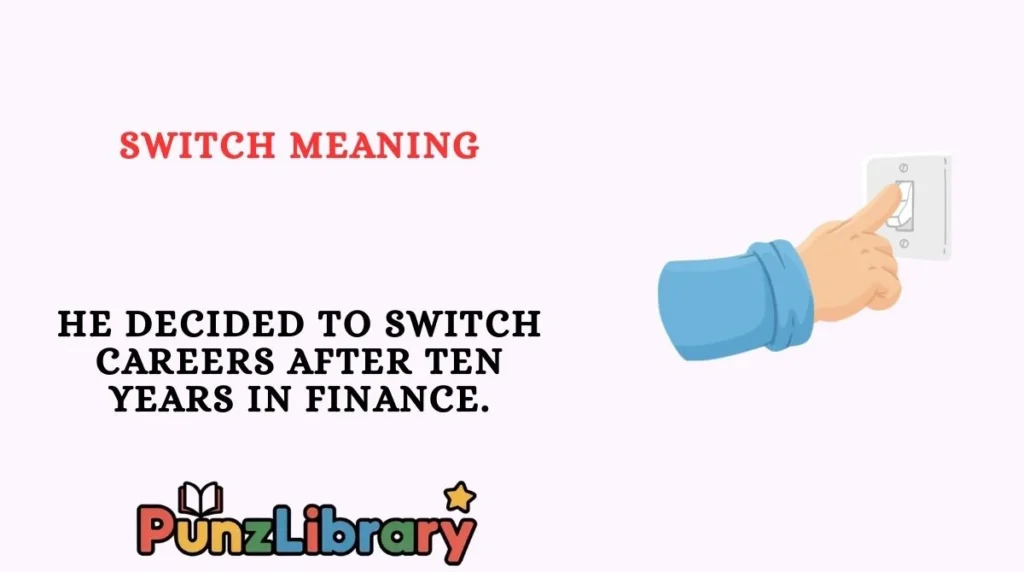
- He decided to switch careers after ten years in finance.
- During the game, the coach told him to switch positions.
- I need to switch my mindset and start thinking positively.
- Can you switch off the lights before leaving?
- They agreed to switch roles to better understand each other’s challenges.
These examples show the word’s versatility in real-life contexts.
Why Understanding Switch Matters Today
In a world that changes constantly, understanding the concept of a switch is more important than ever. It’s not just about flipping a button—it’s about adapting, making choices, and navigating life effectively.
Recognizing when to switch perspectives, habits, or priorities can improve emotional intelligence, productivity, and relationships. It empowers you to take control of change rather than being controlled by it. Whether in technology, work, or personal life, the ability to switch wisely is a skill that adds flexibility, resilience, and confidence to your journey.
Frequently Asked Questions
What does switch mean in simple words?
A switch is something that changes the state of something else. It can be a device, action, or decision that turns things on, off, or from one state to another.
Is switch positive or negative?
It depends on the context. A switch can be positive, negative, or neutral. Often, it represents change and adaptability, which are generally beneficial.
Where is switch commonly used?
Switch is used everywhere: in electronics, apps, work tasks, relationships, and even personal growth.
Is switch formal or informal?
Both. It’s simple enough for casual conversation but precise enough for technical, business, or educational contexts.
Why do people search for switch?
People search for switch to understand its technical use, metaphorical meaning, or practical applications in life, work, and relationships.
Conclusion
A switch is far more than a button or a word—it’s a symbol of change, adaptability, and choice. From turning on a light to switching your mindset, every switch you make carries meaning and potential.
Embrace the power of small changes—they often lead to the biggest transformations.
Remember: life isn’t about avoiding switches, it’s about using them wisely to move forward with purpose.