Ever come across TSS in a message and wondered if it’s a secret code or some kind of shorthand you missed? You’re not alone.
With texting, social media, and instant messaging evolving constantly, new acronyms pop up all the time, and not knowing what they mean can leave you feeling out of the loop.
Whether you’re texting a friend, chatting at work, or scrolling through social media, understanding these terms makes communication smoother and more fun.
TSS meaning in text isn’t as complicated as it might seem. It’s part of the evolving language of the digital age, where shortcuts save time but sometimes leave readers scratching their heads.
Knowing what TSS stands for can prevent confusion, help you respond appropriately, and even make your texts feel more relatable and modern.
In this guide, we’ll break down TSS in a clear, conversational way, share examples, and explore why this tiny acronym matters more than you might think.
What Does TSS Mean?
In the world of texting, TSS most commonly stands for “That’s So Sad.” It’s an emotional shorthand people use when reacting to sad news, unfortunate events, or stories that tug at the heartstrings. Instead of writing a long response, TSS delivers empathy or sympathy in just three letters.
Real-life examples:
- Friend: “I lost my wallet today 😢”
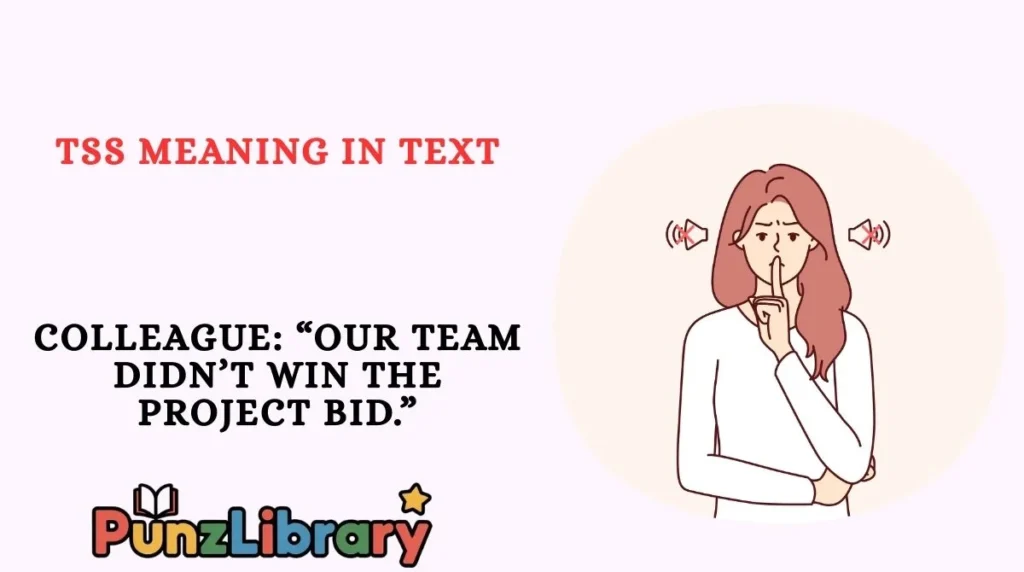
You: “TSS, hope you find it soon!” - Colleague: “Our team didn’t win the project bid.”
You: “TSS, I know you all worked hard.” - Social Media Comment: “Her dog ran away yesterday.”
Commenter: “TSS, sending hugs!”
It’s simple, quick, and emotional, which is why it has caught on in informal digital communication.
Origin and Background of the Term
TSS, like many text abbreviations, emerged from online forums and texting culture where speed mattered. Back in the early 2000s, people started shortening common phrases like LOL (“laugh out loud”) or BRB (“be right back”) to save time. TSS came from the need to express empathy quickly without typing a full sentence.
Think of it like this: if someone tells you about a small heartbreak, it’s easier to type TSS than, “Oh no, that’s really sad to hear.” Over time, it became a cultural shorthand, especially popular among younger generations who grew up texting daily.
How TSS Is Used in Daily Life
TSS isn’t just for personal chats—it pops up in various contexts:
- Messaging Apps: Texts to friends or family.
Example: “TSS, I’m so sorry about your exam result.” - Social Media Comments: Instagram, Twitter, TikTok reactions.
Example: “TSS, that video was heartbreaking.” - Emails (Informal): Quick internal communication among colleagues.
Example: “He missed the deadline? TSS.” - Storytelling: Replying to personal stories online.
Example: “TSS, hope everything gets better soon.” - Memes or Posts: Used humorously in contrast to dramatic situations.
Example: “TSS, when your pizza burns in the oven.”
Emotional or Practical Meaning of TSS
Beyond being an abbreviation, TSS carries emotional weight. Using TSS shows empathy, care, and quick emotional engagement. It’s a shortcut that helps people express support without overcomplicating a conversation. In social contexts, acknowledging sadness—even digitally—strengthens human connection.
Think about it: if a friend texts “I can’t make it to your party,” replying with TSS instantly communicates understanding without needing a long paragraph. It’s practical, efficient, and culturally understood.
Similar or Related Terms
Here are some other abbreviations that share a similar vibe:
- SMH – Shaking my head; shows disbelief or disappointment.
- FML – “F*** my life”; extreme frustration or misfortune.
- OMG – “Oh my God”; surprise or shock.
- SAD – Literally “sad,” sometimes used sarcastically.
- TTYL – “Talk to you later”; casual sign-off, unrelated emotionally but similar texting shorthand.
Notice how each serves a specific emotional or conversational function, just like TSS.
Common Misunderstandings About TSS
Many people mix up TSS with other abbreviations. Here are a few clarifications:
- TSS is not a medical term in texting. Some confuse it with “Toxic Shock Syndrome,” but context matters.
- It doesn’t always mean sadness. Occasionally, it’s used sarcastically.
- Not for formal communication. Using TSS in professional emails may seem careless.
- It’s not a reaction to happiness. Don’t use TSS for joyful news.
- It’s not widely recognized by older generations. Younger people use it more online.
Understanding context ensures TSS communicates the intended emotion.
Examples of TSS in Sentences
Here’s how TSS might appear naturally in everyday chats:
- “TSS, I can’t believe she moved away so suddenly.”
- “He failed the test? TSS, better luck next time!”
- “TSS, the concert got canceled because of rain.”
- “I lost my phone again… TSS.”
- “TSS, your favorite show got postponed.”
- “Her cat ran out last night. TSS 😿.”
- “TSS, the bakery ran out of my favorite cookies.”
- “Our team didn’t make it to finals. TSS.”
Notice how TSS is short, relatable, and emotionally responsive.
Why Understanding TSS Matters Today
In a digital-first world, texting is often the primary form of communication, and acronyms like TSS make conversations faster and more expressive. Understanding TSS means you’re in sync with online culture, able to respond empathetically, and avoid miscommunication. It also keeps you connected with friends, colleagues, and social media communities in a way that feels natural and modern.
Whether it’s a quick text, a comment on a post, or a chat during a stressful day, knowing TSS ensures your words carry the intended emotional tone. And honestly, being able to communicate effectively online is just as important as face-to-face conversations today.
Frequently Asked Questions
What does TSS mean in simple words?
TSS stands for “That’s So Sad.” It’s a way to quickly express empathy or sympathy in texting.
Is TSS positive or negative?
It’s neutral but leans toward expressing sadness or concern. It’s caring, not harsh.
Where is TSS commonly used?
Mostly in text messages, social media posts, and informal chats online.
Is TSS formal or informal?
TSS is strictly informal. Avoid using it in professional emails or official documents.
Why do people search for TSS?
People often see it online or in messages and wonder what it means to avoid misunderstanding or respond appropriately.
Conclusion
TSS might be just three letters, but it carries a lot of emotional power. It’s quick, relatable, and shows empathy in a fast-paced digital world.
By understanding TSS, you’re not just learning a texting shortcut—you’re connecting with people on a human level, even through screens. Next time you see TSS in a chat, you’ll know exactly how to respond—and maybe even send a little comfort in return.
Remember: small gestures of empathy, even digitally, can make someone’s day brighter.